
Berlin has a reputation problem it can't quite shake: international press has taken to calling it the "loneliness capital" of Europe, despite being one of the continent's most visited and most international cities. It's not an unfair label. In InterNations' 2025 Expat Insider survey, Germany ranked 42nd out of 46 countries overall, landing in the bottom ten for nearly every "settling in" category - the year before, it ranked 50th of 53, including 49th for local friendliness and dead last for ease of making friends. Berlin, as Germany's most international city, sits right in the middle of that reputation.
Here's what actually explains it, and what to do about it.
Berlin's difficulty isn't really about unfriendliness - it's a combination of transience and a cultural style that reads as cold to people who aren't used to it.
Roughly a quarter of Berlin's registered residents - over 976,000 people from more than 190 countries - are foreign nationals, which sounds like it should make the city easier to plug into socially, not harder. The problem is turnover: a large share of that international population is transient, in Berlin for a project, a fixed contract, or "the Berlin experience," and a meaningful share of new arrivals leave again within a couple of years. That churn means Berliners and long-settled internationals have learned to be selective about who they invest time in, since the person they meet at a party has a real chance of moving away before the friendship goes anywhere.
Layer onto that the local communication style Berliners call Berliner Schnauze - a blunt, unsentimental directness that isn't hostility, but reads as cold to people used to more social warmth on first meeting. Nobody is going to fake enthusiasm to smooth your way into a friend group; acceptance in Berlin tends to be earned through repeated contact rather than granted through friendliness at first meeting.
Neither of these is a reason to give up - it's a reason to be deliberate about where and how you show up, which is what the rest of this guide covers.
Rather than trying to out-strategize Berlin's transience and reserve on your own, it's worth knowing there's a curated option built specifically to supply the recurring structure Berlin's social scene doesn't hand you automatically.
Les Amis operates in Berlin as one of its ten European cities, alongside Amsterdam, Barcelona, Copenhagen, Madrid, Milan, Munich, Paris, Stockholm, and Zurich, plus Austin and New York in the US. It's a members-only women's community: you apply to join (Les Amis currently maintains a waitlist given demand), then get matched 1:1 with another Berlin member every two weeks and can attend curated small-group events in the city - capped intentionally at 8–12 women, workshops, dinners, and classes built into the membership rather than something you have to organize yourself. Membership runs as a monthly fee plus a one-time joining fee added at checkout.
The reason this is worth naming specifically for Berlin: the city's biggest social obstacle is the lack of automatic, repeated contact with the same people, since so much of the population is in flux. A structure that supplies the recurring event calendar directly, rather than asking you to rebuild that structure yourself against a culture that isn't going to make the first move, addresses the actual bottleneck.
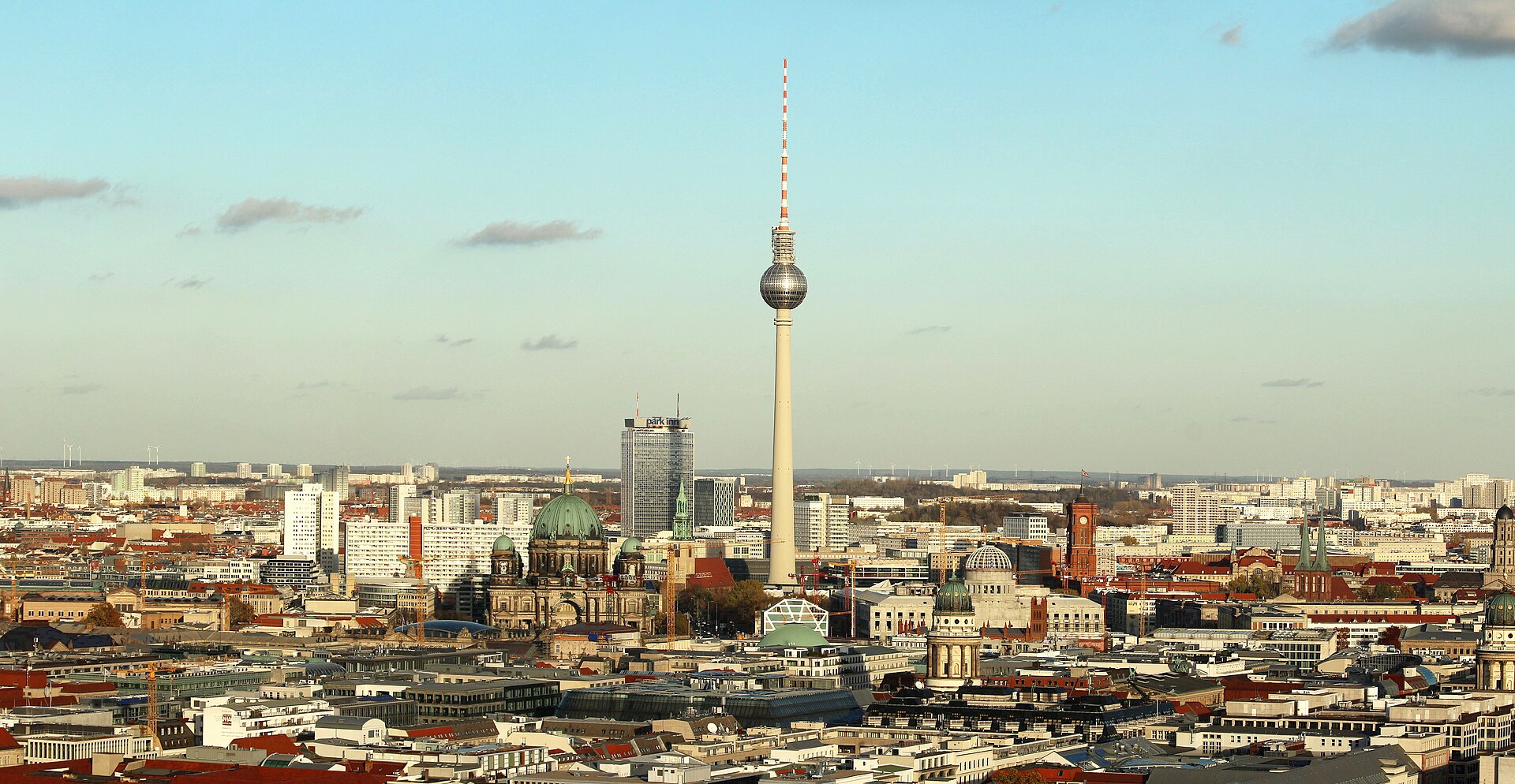
Where you spend time in Berlin matters more than in most cities, because the social scene is different district by district.
If you're choosing where to live partly for social reasons, these three districts consistently top the list for a reason: density of English-friendly venues and a younger, more international resident base than Berlin's outer districts.
.jpg)
A: Berlin combines a highly transient population (a large share of internationals leave again within a couple of years) with a local communication style, Berliner Schnauze, that's blunt rather than warm on first meeting. Neither means Berliners are unfriendly; both mean acceptance is earned through repeated contact rather than offered upfront, which takes newcomers longer to adjust to than in many other cities.
A: It's a reputation the international press has attached to Berlin, and the data doesn't fully contradict it: Germany ranked in the bottom ten of nearly every "settling in" category in InterNations' 2025 Expat Insider survey, including ease of making friends. It reflects a real, documented pattern rather than just a stereotype, though it doesn't mean making friends in Berlin is impossible - just that it typically takes longer and more deliberate effort than in a more overtly welcoming city.
A: Neukölln, Kreuzberg, and Prenzlauer Berg are the three most commonly recommended, each for a different social style: Neukölln for an affordable, young, international crowd; Kreuzberg for nightlife and an alternative scene; Prenzlauer Berg for a calmer, café-and-park-based social life. English is widely spoken in all three.
A: InterNations Berlin (large, general-purpose expat network), Girl Gone International Berlin (free, women-only, Facebook-based), Berlin English Speakers Meetup, and city-specific Facebook groups like Expat Women Berlin are the most commonly recommended starting points, alongside curated communities like Les Amis for women who want a more structured, ongoing social calendar.
A: Not to start - English is widely spoken in the international-friendly districts and through expat-focused groups, so you can build an initial social circle without it. Learning German, even at a basic level, does open up a wider social layer through Vereine (German hobby and sports clubs) and interactions with longtime Berlin residents that stays largely inaccessible to English-only newcomers.
Berlin's reputation as a hard city to make friends in is earned, but it's explainable rather than mysterious: a transient population and a blunt communication style, not unfriendliness. The people who build a real social life here tend to do the same few things: pick a neighborhood with density of English-friendly spaces, join something recurring rather than a string of one-off events, and give it more time than feels natural before judging whether it's working.
Les Amis is one way to skip straight to the "recurring" part - a curated community that runs in Berlin, with matching and events already built in rather than left for you to organise from scratch.
We believe that a strong female circle is one of the key components of a successful and fulfilled life for every woman
Your family of girlfriends