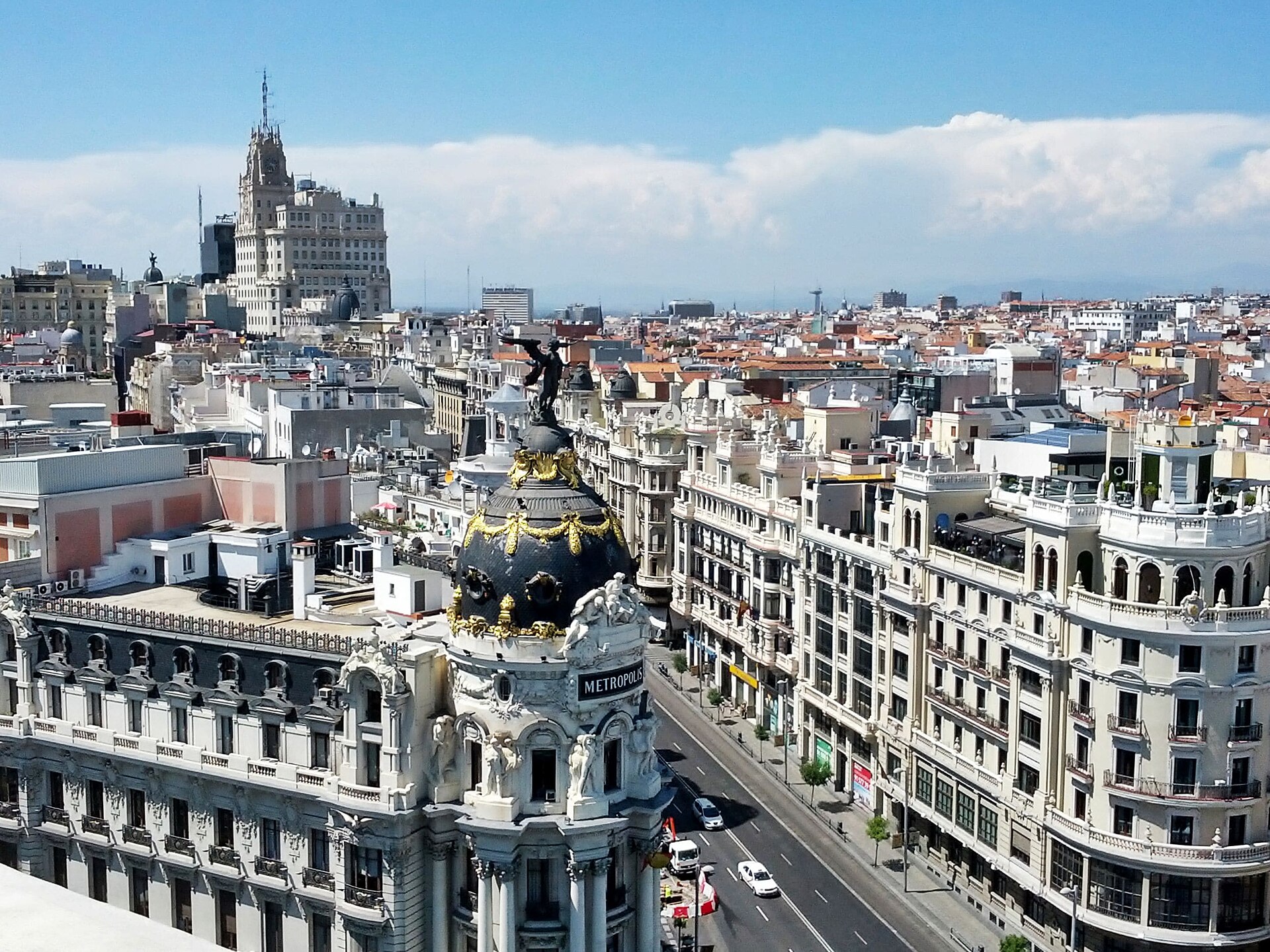
Madrid is, by most measures, one of the easier cities on this list of guides to actually like living in. Spain ranked 9th out of 46 destinations overall in InterNations' 2025 Expat Insider survey (the only European country to crack the global top 10), and Madrid itself landed a top-ten spot among the world's best cities for expat living. Three-quarters of expats in Spain say they feel at home there, compared to 58% globally. If you've read our guides to Berlin, or Amsterdam, Madrid is a different story: the baseline warmth is real.
The nuance is this: warmth and quick social ease don't automatically translate into deep, lasting friendship. Spaniards are famously open to a conversation, a plan, a shared table, but many have kept the same close friend group, their cuadrilla, since childhood or university, and Spanish social life runs on less of a "networking" culture for new friendships than you might expect given how easy the city feels on arrival.
Here's what that means in practice, and how to work with it rather than against it.
The gap in Madrid isn't unfriendliness at all, but the difference between being welcomed into a conversation and being welcomed into someone's inner circle.
Spaniards tend to build their closest friendships early and keep them: a cuadrilla formed in school or university often stays intact for decades, with its own rhythms, inside jokes, and plans that don't require much active recruiting of new members. That's very different from unfriendliness, because Madrileños will happily chat, invite you for a caña, and make a plan for la próxima, but the step from a warm acquaintance to someone's actual circle takes longer than the initial warmth suggests it will, especially if you're arriving later in life rather than as a student.
The practical implication: Madrid rewards patience and repetition more than it rewards charm on a first meeting, even though the first meeting itself is usually easy to come by.
_1.jpg)
Given that Madrid's real bottleneck is depth rather than access, a structure that supplies repeated contact with the same group of women is worth knowing about from the start.
Les Amis operates in Madrid as one of its ten European cities, alongside Amsterdam, Barcelona, Berlin, Copenhagen, Milan, Munich, Paris, Stockholm, and Zurich, plus Austin and New York in the US. It's a members-only women's community: you apply to join (Les Amis currently maintains a waitlist given demand), then get matched 1:1 with another Madrid member every two weeks and can attend curated small-group events in the city - capped intentionally at 8–12 women, workshops, dinners, and classes built into the membership rather than something you organize yourself. Membership runs as a monthly fee plus a one-time joining fee added at checkout, and a single Open Event pass is available if you'd rather try a Madrid event before committing to membership.
The reason this fits Madrid specifically: the city makes the first conversation easy, but turning that into an actual circle takes the same small group of people showing up for each other more than once. A structure that supplies that repetition directly shortens the distance between "easy to meet" and "actually know".
All three share the same underlying asset: Madrid's terraza culture, where socializing happens outdoors, at a shared table, more often than it does behind closed doors, which structurally lowers the bar for striking up a conversation compared to cities built around private gatherings.
_edited.jpeg)
Q: Is it actually easy to make friends in Madrid?
A: Easier than in many European cities, yes. Spain ranked in the global top 10 for expats overall, and Madrid is a top-ten city for expat living, with the large majority of expats reporting they feel at home there. The nuance is that initial warmth and quick conversation don't always convert quickly into deep friendship, since many Madrileños maintain tight childhood or university friend groups that take time to be let into.
Q: What is a "cuadrilla" and why does it matter for making friends?
A: A cuadrilla is a close Spanish friend group, often formed in school or university and maintained for decades. These groups are warm and open to a new acquaintance socially, but less actively looking to add new core members, which is why building a real friendship in Madrid often benefits from repeated, patient contact rather than expecting one great night to lead somewhere immediately.
Q: What's the best neighborhood in Madrid for meeting people?
A: Malasaña, Chueca, and La Latina are the three most commonly recommended, each with a slightly different flavor: Malasaña for a young, creative, international crowd; Chueca for an especially welcoming, diverse nightlife scene; La Latina for a more traditional Spanish social atmosphere with a strong local mix.
Q: What are the best expat groups in Madrid?
A: InterNations Madrid (including its women-only Activity Groups), PWN Madrid, Girl Gone International Madrid, and Madrid's language exchange scene (Meet & Speak, Multilinkual) are the most commonly recommended starting points, alongside curated communities like Les Amis for a more structured, ongoing social calendar.
A: Do I need to speak Spanish to make friends in Madrid?
Q: Madrid's international population and its many English-friendly cafés, bars, and expat networks make an initial social circle possible without it. Learning Spanish, even informally through a language exchange, meaningfully widens your access to Madrileños themselves rather than just the international community, and intercambios specifically are built around exactly that exchange.
Madrid earns its reputation as one of Europe's friendliest cities - the conversations come easily, the invitations come easily, and the quality of life backs it up. What takes longer is the quiet, second step: turning an easy evening into a real, recurring relationship. The people who build a genuine circle here tend to do the same thing - show up to the same group more than once, treat the terraza as the default social space it is, and give a promising connection months rather than weeks before deciding whether it's become a real friendship.
That second step is what Les Amis is built around in Madrid. It's a members-only club for women where every member is reviewed by application and the experiences are small groups of 8-12 women, already planned, so the same faces keep coming back. You don't have to engineer the follow-up yourself: the terraza evening you'd have to organise on your own is already on the calendar.
Join nowWe believe that a strong female circle is one of the key components of a successful and fulfilled life for every woman
Your family of girlfriends