


Bumble's friend-finding mode - rebranded and spun out as its own standalone app, Bumble For Friends, in 2023 - is still one of the most-downloaded friendship apps for women. Though it comes with a familiar set of problems: matches that never progress past a "hey", a swipe format that feels identical to dating, and conversations that fizzle out after two or three exchanges with nothing underneath to keep them going.
The swipe-first format that works reasonably well for dating doesn't translate cleanly to friendship, where the signals that predict compatibility (shared context, values) are different from what a profile photo and a bio can convey.
We looked at the apps women are switching to when Bumble For Friends isn't converting, and ranked the eight worth trying.
%20(1).jpg)
Les Amis is a members-only women's community that replaces the swipe deck entirely with a curated application process and small-group in-person events.
Where Bumble For Friends optimises for volume, Les Amis optimises for conversion: fewer connections, but a structure (1:1 intros every two weeks, plus curated events of 8-12 women) that's built to turn a casual acquaintance into an actual friendship rather than a dead chat thread. If ghosting and shallow chat are your specific frustration with Bumble BFF, the fix isn't a better matching algorithm - it's a format that doesn't rely on chat to carry the relationship in the first place.
Where it's available: Amsterdam, Barcelona, Berlin, Copenhagen, Madrid, Milan, Munich, Paris, Stockholm, Zurich, plus Austin and New York.
Cost: Paid monthly membership, plus a one-time joining fee.
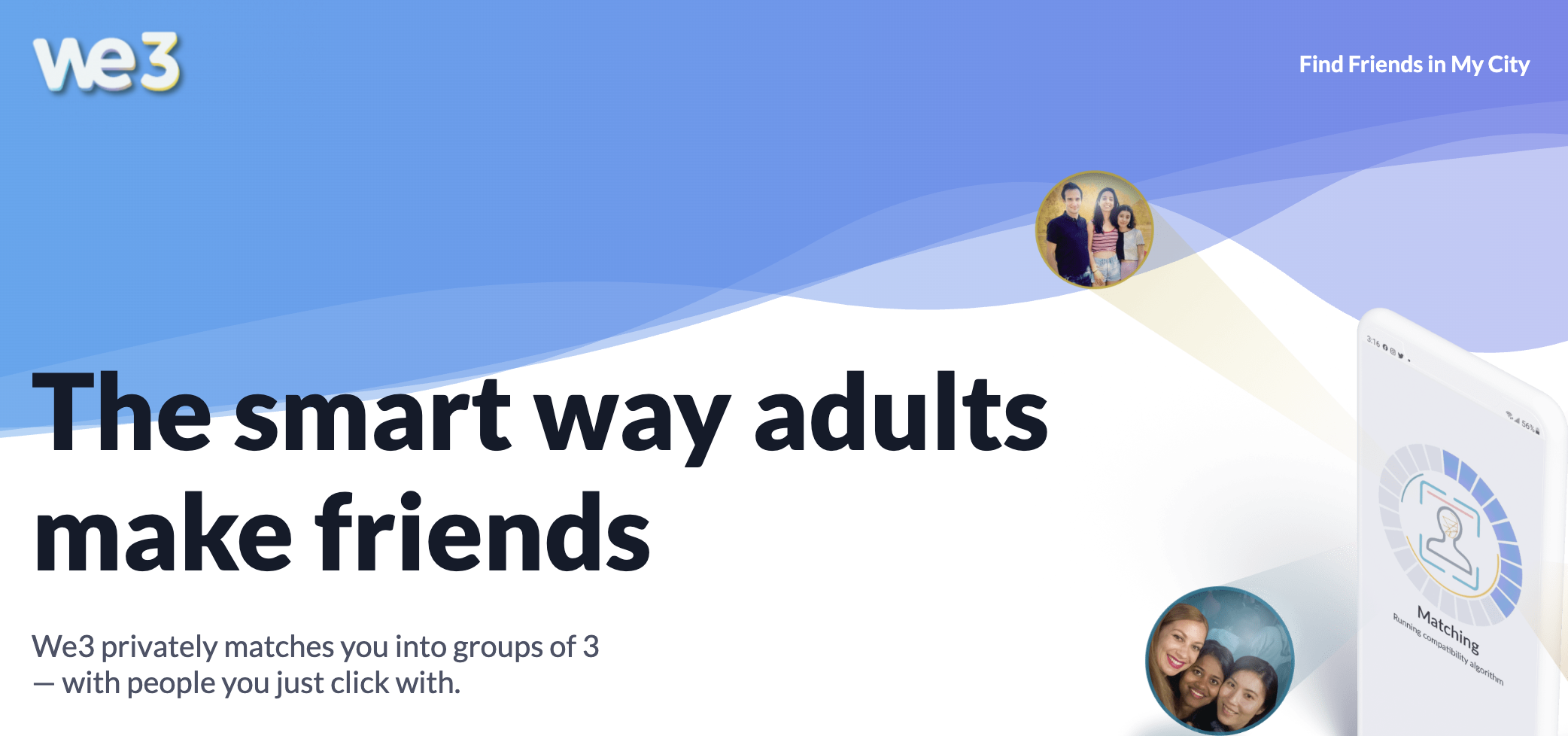
We3 matches you into groups of three based on a psychographic quiz, instead of pairing you 1:1 - small enough to avoid crowd dynamics, large enough that no single conversation carries the weight of "did this work".
In a group of three, one quieter member doesn't collapse the conversation the way it does in a two-person thread. Profiles are never public - only people you're matched with can see you - and you can filter to be matched with women only, which keeps the safety profile closer to a women-only app even though We3 itself is open to all genders.
Cost: Free, with a paid We3 Plus tier for additional features.

Meetup replaces profile-based matching with activity-based grouping: you show up to a hiking group, a book club, or a supper club, and the friendship forms around repetition and shared interest rather than a first impression.
If part of what feels off about Bumble BFF is being evaluated on a photo and a three-line bio, Meetup sidesteps that entirely. Nobody's swiping on you - you're just the person who shows up to the same Tuesday run club, which is actually a stronger predictor of friendship than any matching algorithm.
Cost: Free to attend most groups.
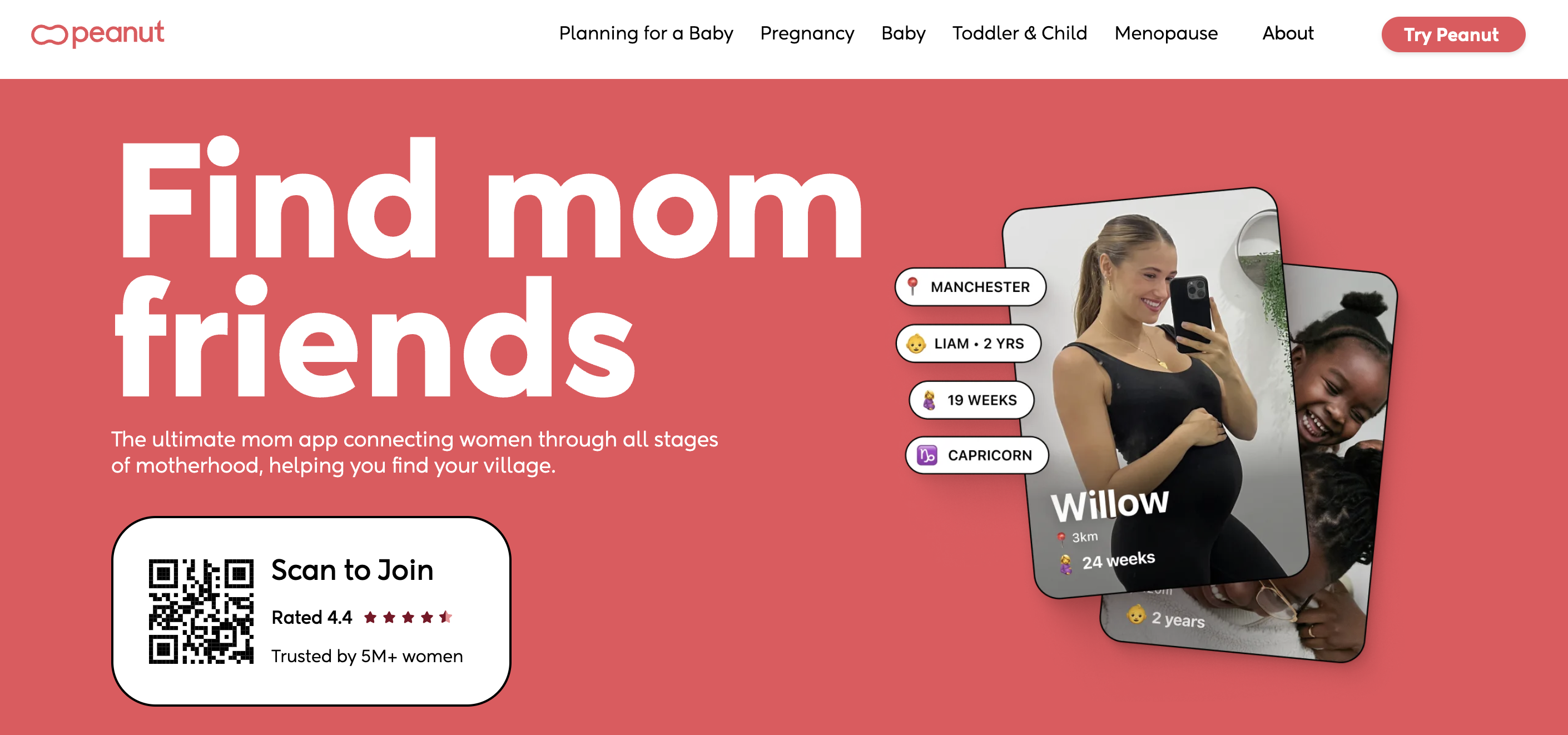
Peanut matches women specifically on fertility, pregnancy, motherhood, or menopause stage.
If you've tried Bumble BFF while pregnant, postpartum, or navigating perimenopause and found the matches irrelevant to what you're actually going through, Peanut's life-stage-first model solves that specific gap.
Cost: Free with Premium tier.
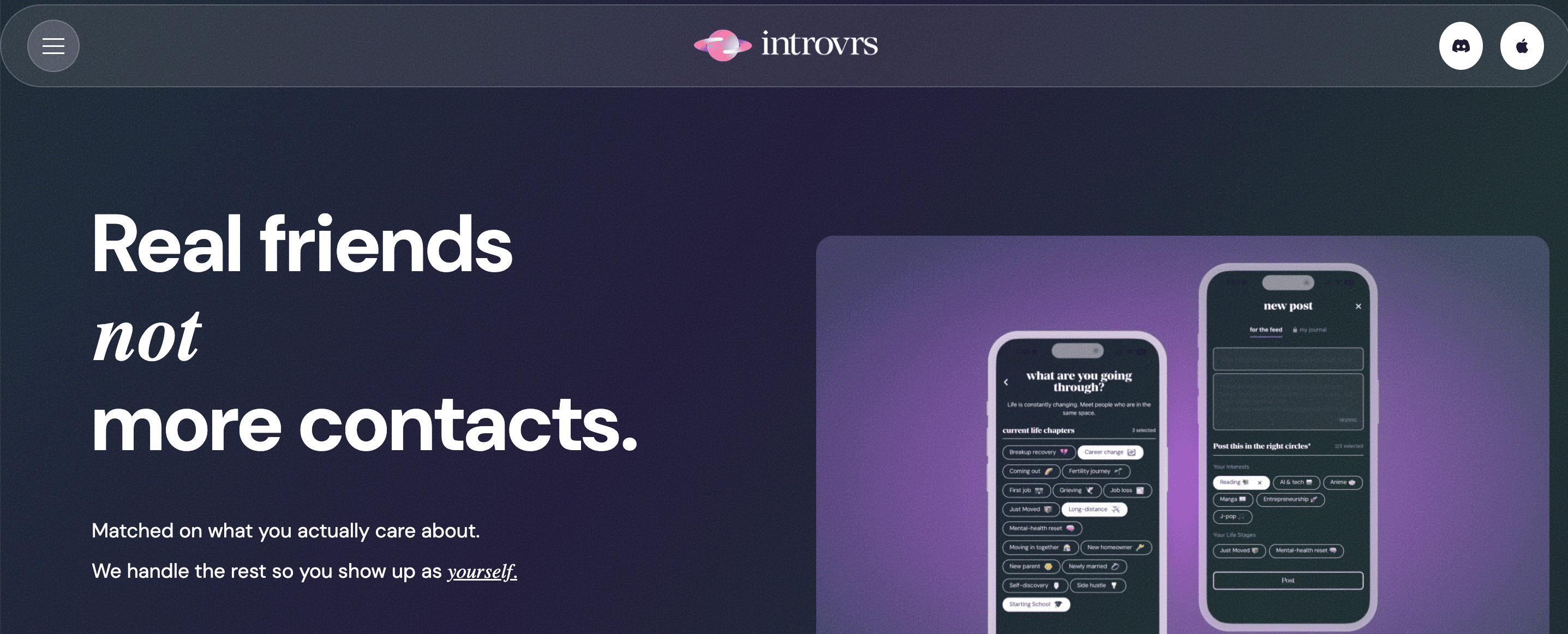
Introvrs was explicitly designed as a reaction to swipe-based friendship apps: it matches on values and life context rather than photos, and gives you one weekly match instead of an endless stack.
Introvrs is the most direct "if you're tired of Bumble BFF specifically, try this" app on the list - its own positioning is built around that exact frustration. Instead of browsing, you get a single, evidence-based match per week, with the reasoning behind the match shown to you. It's a fundamentally different pace than a swipe deck, aimed at people who find volume-based matching exhausting rather than exciting.
Cost: Free.
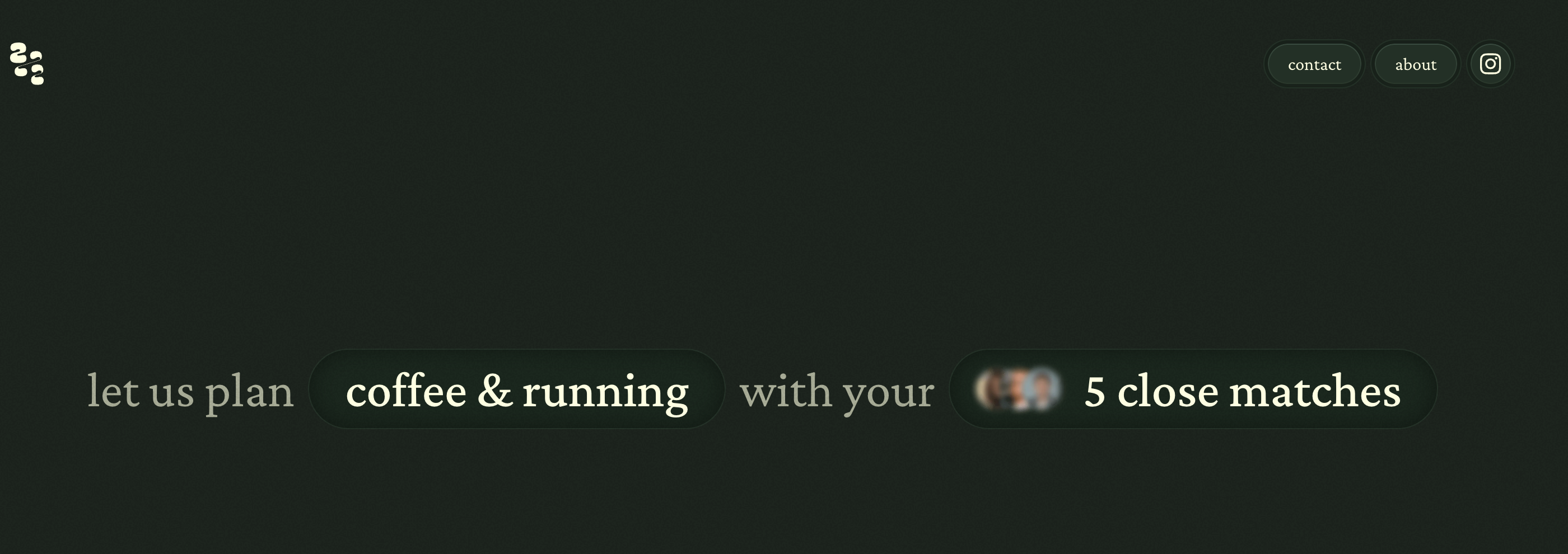
222 pairs you with algorithmically matched strangers for a dinner and a follow-on activity, and unlike a one-off dinner format, the matching improves the more events you attend, with the company estimating it takes about five events for the algorithm to learn your rhythm.
222 solves the Bumble BFF problem from a different angle: it removes matching-by-browsing entirely and replaces it with a system that's designed to get smarter about you over time, rather than treating every swipe as a fresh cold start. Started as a Y Combinator-backed research project on predicting compatibility, it pairs a dinner with a second, more casual activity afterward (bar, lounge, or similar), which gives a match two different contexts to actually click in.
Cost: Per event.
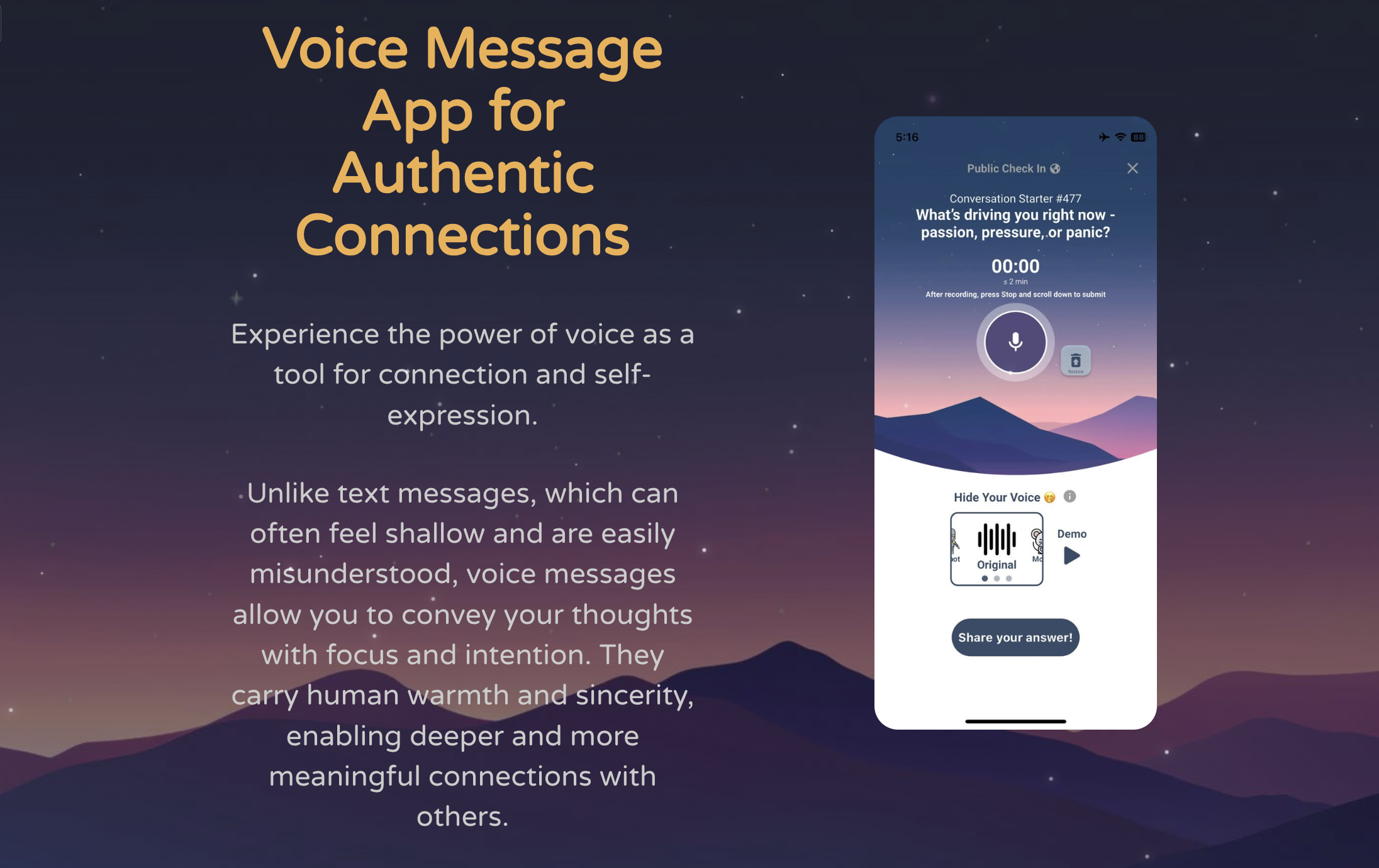
Bubblic strips out photos and swiping: you respond to daily prompts with voice messages, and connections form from how someone actually sounds and thinks, not from a profile photo.
Bubblic isn't women-specific or built around in-person meetups, so it solves a narrower problem than the others on this list: the feeling that Bumble BFF's photo-first format makes platonic connection feel like a beauty contest. If that's your exact frustration, voice-first matching is a different mechanic - reviewers describe the format as slower and more substantive than a swipe deck, which is either exactly what you want or not what you're looking for if in-person meetups are the actual goal.
Cost: Free with premium features.
For women who want matches that reliably convert into real, in-person friendships rather than dead chat threads, Les Amis is the strongest alternative - it replaces the swipe deck with a curated application process and small-group events.
These are structural issues with applying photo-first swipe matching to friendship rather than romance. The format rewards fast, surface-level judgments, but friendship compatibility depends on shared context and repeated contact over time - neither of which a swipe deck is built to capture.
Three complaints come up over and over in reviews and friendship-app comparisons. Matches happen easily, but almost nothing happens after that: ghosting is common, and conversion from match to actual contact is low. The format itself doesn't help: a photo-first stack makes the whole experience feel transactional for something that's supposed to be platonic. And even the conversations that do start tend to stay shallow: a thread opens, runs for two or three exchanges, and dies with nothing underneath to keep it going.
Les Amis (a curated application process instead of a swipe deck), Meetup (activity-based, no profiles to swipe), and Introvrs (one weekly match instead of a stack) are the strongest options for women specifically frustrated with the swipe mechanic itself rather than the idea of meeting new people.
Yes. Bumble's original "BFF" mode graduated into its own standalone app, Bumble For Friends, in 2023. It uses the same swipe-based matching as the dating product, applied to platonic connections, and remains mixed-gender.
Bumble For Friends is open, swipe-based, mixed-gender, and free. Les Amis is application-based, women-only, members-only, and built around small-group in-person events across 12 cities rather than an open-ended chat-based matching pool. Bumble For Friends optimises for the size of the pool; Les Amis optimises for whether a match actually becomes a friend.
Bumble BFF isn't a bad idea, but what it gets wrong for a lot of women is the mechanic: a format built for romantic first impressions doesn't reliably produce the kind of connection platonic friendship needs. The apps that are winning women away from it all do one of two things differently: they remove the swipe entirely, or they replace the chat-courtship phase with something structured enough to actually get you in a room.
If what you want is matches that turn into a real circle rather than another chat thread you'll forget to reply to, Les Amis is built for exactly that - curated, in-person, and available across 12 cities in Europe and the US.
We believe that a strong female circle is one of the key components of a successful and fulfilled life for every woman
Your family of girlfriends





%20(1).jpg)