

.jpg)
The friendship-app category largely inherited its core mechanic from dating apps: browse a stack of profiles, match, chat. And the complaints have followed accordingly: ghosting, conversations that fizzle after a few exchanges, and a format that user reviews consistently describe as feeling identical to dating even when the intent is entirely platonic. A growing share of the newest entrants in the category are built explicitly to avoid this - no stack to browse, no swipe gesture at all.
The best swipe-free ways to make friends in 2026 are Les Amis, Meetup, We3, Introvrs, Friended, Bubblic, InterNations, and Girl Gone International - each replacing the swipe deck with a different mechanic: curated matching plus built-in events, activity groups, quiz-based trios, one weekly considered match, personality-type matching, voice-only prompts, or community-run meetups.
We ranked the strongest swipe-free ways to build a social circle in 2026, apps and otherwise.
%20(1).jpg)
Les Amis replaces swiping with direct, curated matching and a calendar of real events: you're matched 1:1 with another member on a set schedule, and you attend small-group experiences that are already planned - there's no stack of profiles to browse, and no browsing phase at any point in the process.
TechCrunch's April 2026 roundup of friendship apps profiled Les Amis as a members-only app for women, describing an AI-assisted matching process combined with participation in recurring local events - pottery classes, book clubs, wine tastings - built directly into the membership. New matches are introduced weekly rather than browsed on demand, and the community operates in cities including Amsterdam, Barcelona, Berlin, Madrid, Paris, and Stockholm in Europe, plus Austin and New York in the US, with membership pricing that varies by city.
The mechanical difference from a swipe app is the whole point: there's no deck of strangers to evaluate by photo. Matching happens once, on your behalf, and the emphasis shifts entirely from browsing profiles to showing up to an experience that's already scheduled. For anyone whose frustration is the swipe mechanic itself - not the idea of meeting new people - that's a structurally different starting point: a room and an occasion, not a queue of candidates.
Join now
Meetup skips matching entirely: you browse groups by interest - hiking, book clubs, professional networking - and RSVP to events, with no profile-browsing or swiping mechanic anywhere in the product.
Since the "match" is really just showing up to the same recurring group, Meetup sidesteps the swipe format completely. You're not evaluated on a photo or a bio; you're just the person who comes to the same Tuesday run club. It's free to attend most groups, and the trade-off is that group quality and gender balance vary by who happens to run each one.
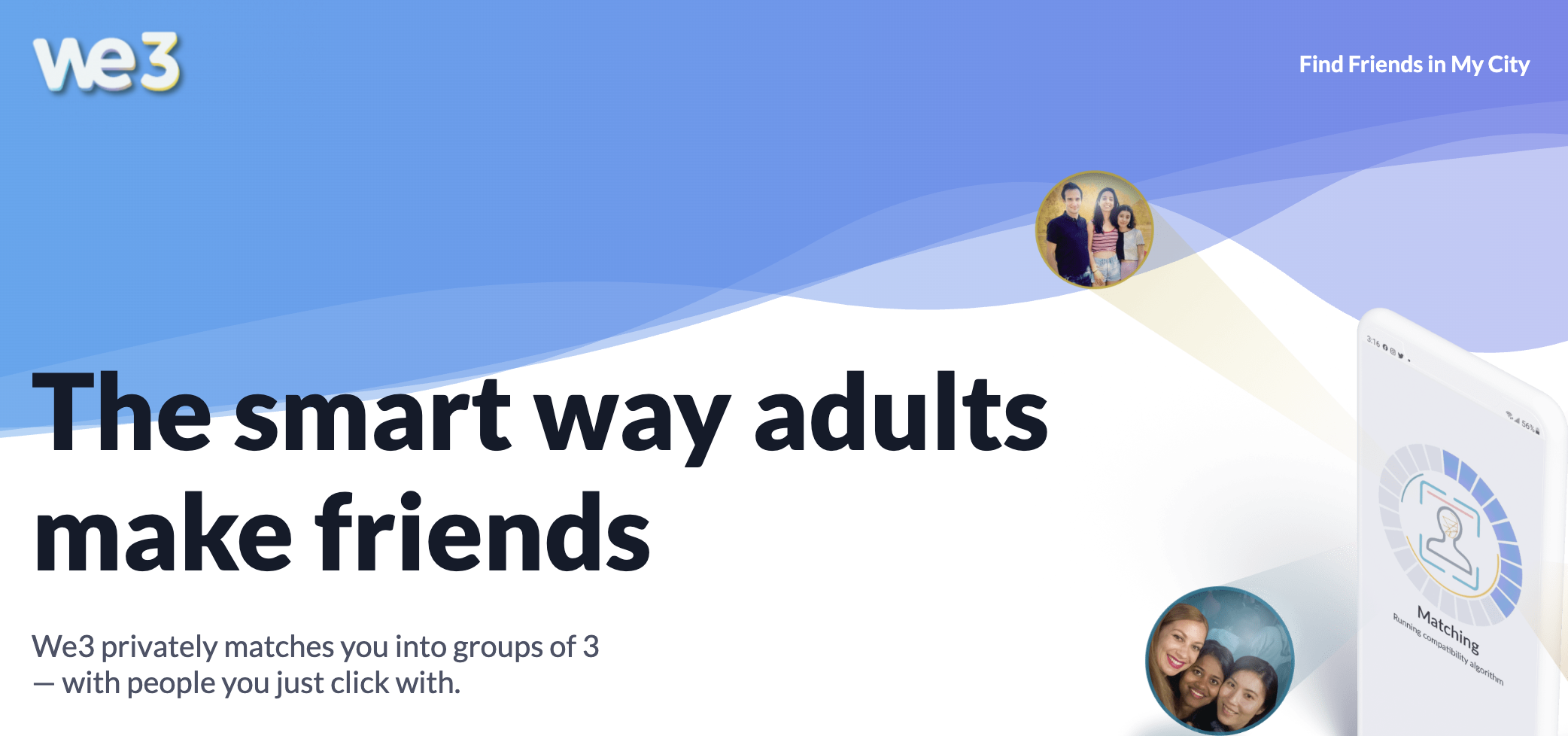
We3 matches you into small trios based on a psychographic quiz rather than a photo-first browsing stack - profiles are never public, and only the people you're matched with can see you.
The trio format is deliberately structured to avoid the pressure of a 1:1 swipe-and-chat dynamic: instead of scrolling through potential matches, you complete a quiz once, and the app places you into a group of three. It's free, with a paid We3 Plus tier for additional features, and it's open to all genders with an optional filter to match with women only.
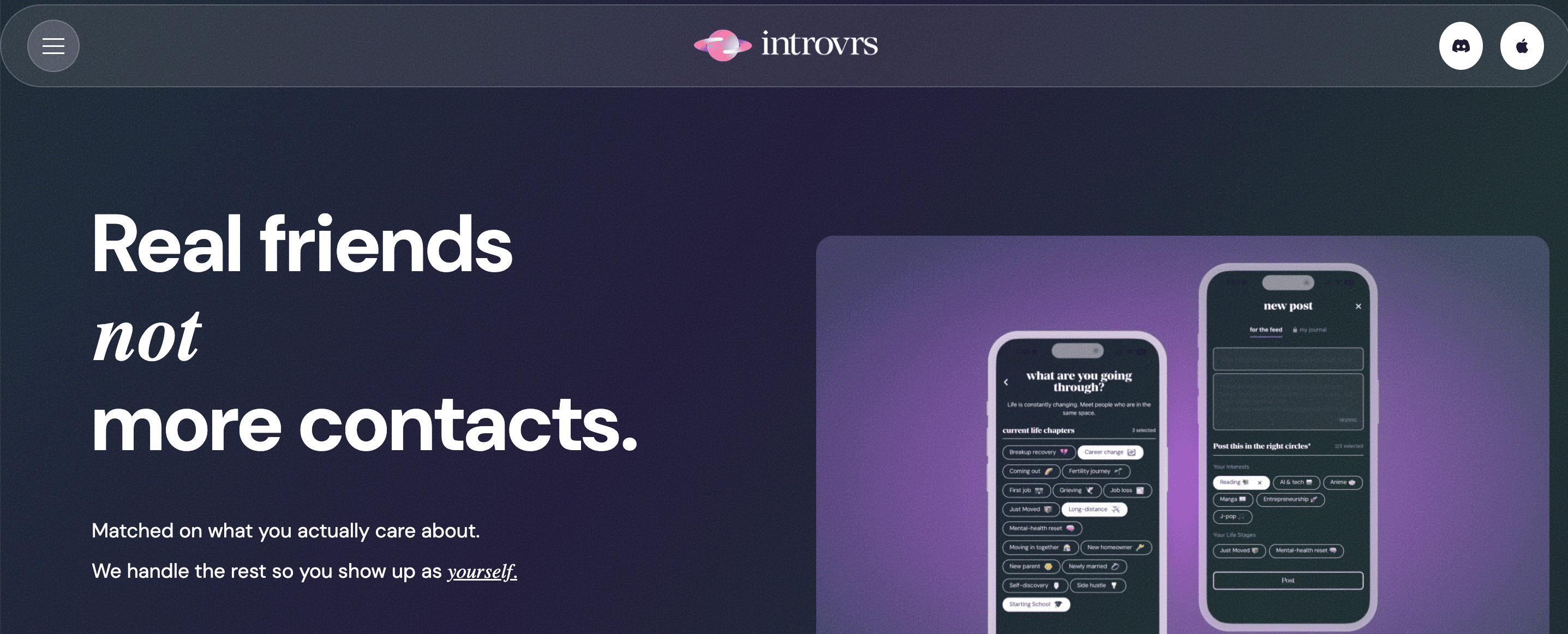
Introvrs was built explicitly as a reaction to swipe fatigue: instead of a browsing stack, it delivers one weekly match based on values and life context, with the reasoning behind the match shown to you.
Where a swipe app optimises for volume, Introvrs optimises for a slower pace: a single, considered introduction rather than dozens of profiles to evaluate. It's free with a paid tier, and it's a natural fit specifically for people who find the sheer volume of swipe-based apps exhausting rather than energising.

Friended matches users on personality type rather than photos, built on the Personality Database's community of more than 6 million users - personality compatibility is the entry point, not a swipeable profile.
For anyone who thinks in MBTI or similar type frameworks, Friended inverts the usual order: type compatibility drives the match, and the photo is secondary rather than the first (and often only) filter. It's free with a paid tier, though it isn't built around in-person meetups the way some other options on this list are.

Bubblic removes photos and swiping entirely - you respond to daily conversation prompts with voice messages, and connections form from how someone sounds and thinks rather than how they look in a profile photo.
This is the most structurally different option on the list: there's no stack, no bio, and no visual evaluation at any point. It's not women-specific and isn't built around in-person meetups, so it solves a narrower problem than the others here - specifically the feeling that photo-first matching turns platonic connection into a beauty contest.

InterNations organises its 420-city expat network around browsable communities and scheduled events rather than person-to-person matching, including women-only Activity Groups inside many of its larger city communities.
There's no swiping mechanic in the product at all: you join a city community, browse events and interest-based Activity Groups, and RSVP. It's free to download, with a paid Albatross tier unlocking additional events.

Girl Gone International organises primarily through local Facebook groups and volunteer-run meetups rather than any kind of profile-matching system - you join your city's chapter and show up to what's scheduled.
With 300+ chapters worldwide and no cost to join, GGI is less a slick product than a community bulletin board, but the complete absence of a matching mechanic means there's nothing resembling swipe fatigue to run into in the first place.
The apps and communities that work without swiping all lean on the same underlying mechanism, and it's the same one offline research points to as well.
A classic 1950 study by Festinger, Back, and Schachter found that 65% of friendships in a university dormitory formed between residents living within five doors of each other - repeated, low-stakes exposure to the same people, without any matching mechanic involved. A 2024-2025 scoping review found that regular, structured programs - a class, a club, a standing group - are what reliably produce new friendships, independent of any app. And research on home-based interactions found that hosting predicts growing closeness specifically, with a reciprocity effect that tends to generate return invitations.
This is exactly the mechanism event-based communities are built around, and exactly what a swipe deck doesn't provide: a swipe deck optimises for evaluating strangers quickly, while an experience-based structure optimises for the thing that actually produces friendship - repeated, structured time with the same people.
A: Les Amis (experience-based, curated matching plus recurring events), Meetup (activity-based, no profiles), We3 (trio matching via quiz), Introvrs (one weekly match based on values), Friended (personality-type matching), Bubblic (voice-only, no photos), InterNations, and Girl Gone International (both community- rather than match-based) are the strongest options that avoid a swipe mechanic entirely.
A: Swipe-based friendship apps inherited their core mechanic from dating apps, and user complaints - ghosting after a match, conversations that stall quickly - consistently describe the same underlying issue: a format built for quick romantic judgments doesn't translate well to platonic compatibility, which depends more on shared context and values than a first impression from a photo.
A: Yes, research on friendship formation consistently supports deliberate proximity (frequenting the same places repeatedly), joining structured recurring activities, and hosting people in your home, none of which require an app. Apps are a tool for discovery and matching; the underlying mechanism that builds friendship is repeated, in-person contact, which can be engineered with or without a swipe-free app.
A: Most swipe-free apps solve the matching mechanic (values-based, personality-based, voice-based, or trio-based instead of photo-and-swipe) but still leave the transition from match to an actual meeting up to the two people involved. Les Amis pairs its non-swipe, application-based matching with a standing calendar of recurring, curated in-person events, so the structure covers both the matching step and the meeting step.
The swipe mechanic isn't inherently broken - it works reasonably well for the job it was originally built for, quick romantic judgment. It's a worse fit for platonic compatibility, which is why so much of the newest wave of friendship-focused products has moved away from it entirely, toward quizzes, applications, voice, and curated events instead of a browsing stack. Whichever of these you try, the mechanic, not the brand, is what to evaluate against your specific frustration with the swipe format.
We believe that a strong female circle is one of the key components of a successful and fulfilled life for every woman
Your family of girlfriends




.jpg)