%20(1).jpg)
Moving to a new country as a woman is one of the most transformative things you can do - and one of the loneliest. InterNations' annual Expat Insider survey consistently finds "making friends" among the top three challenges of expat life, ahead of language, housing, and bureaucracy. Women report it as their number-one challenge more often than men. The World Health Organization's June 2025 report estimated that 1 in 6 people worldwide experience persistent loneliness, with international migrants disproportionately affected.
The good news is that Europe has more dedicated infrastructure for expat women than almost anywhere else in the world. Long-running women's clubs founded in the 1930s are still going. Fast-moving global networks like Girl Gone International have over 100 city chapters across the continent. A new generation of curated members clubs is built specifically for the women rebuilding their lives in a new city.
%20(1).jpg)
Les Amis is a members-only women's community across Europe and the US, built around small-group in-person experiences for women rebuilding their social lives in a new city.
For expat women, Les Amis was built to solve exactly the problem of arriving somewhere new and not knowing anyone. The community operates in ten European cities - Amsterdam, Barcelona, Berlin, Copenhagen, Madrid, Milan, Munich, Paris, Stockholm, and Zurich - plus Austin and New York in the US. Members can attend events in any of the twelve cities, which makes it a genuinely international network: one membership that follows you when you move, travel, or split your time across hubs.
Ambitious, curious women in their mid-20s to early 40s: expats, women who just moved, founders, women rebuilding social lives after a chapter change, or anyone whose friend group has scattered across countries.
Europe: Amsterdam, Barcelona, Berlin, Copenhagen, Madrid, Milan, Munich, Paris, Stockholm, Zurich. Also Austin and New York in the U.S.
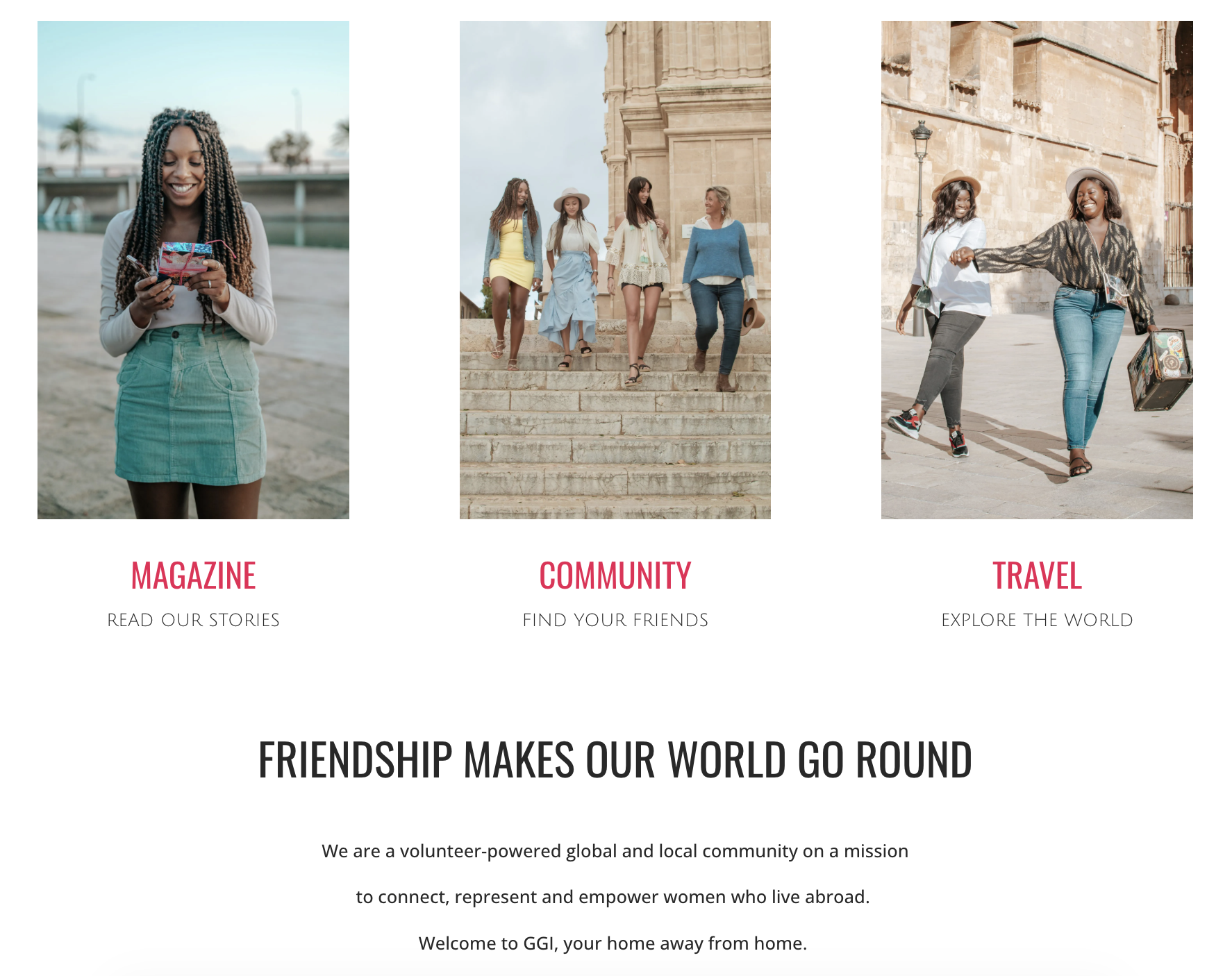
Girl Gone International is a global non-profit network of 80,000+ international women across more than 100 European cities, organised primarily through local Facebook groups and volunteer-led IRL meetups.
If you've moved abroad and Googled "expat women community," GGI is almost certainly the first thing that came up. Founded as a Facebook-first community, GGI now has over 300 local chapters worldwide, with the strongest density in European cities like Lisbon, Berlin, Amsterdam, Barcelona, Copenhagen, and Paris. It is the default first port of call for newly arrived expat women - partly because it's free, partly because the network effects are enormous.
Women who want a free, low-friction way to plug into the expat scene in any major city.
100+ European cities; 300+ globally.

InterNations is the world's largest expat network — with around 6 million members across 420 cities — and runs women-focused Activity Groups inside its biggest European city communities.
InterNations itself is mixed-gender, but inside most of its larger European communities - Paris, Berlin, Madrid, Munich, Amsterdam, Lisbon, Vienna, Brussels - there are women-only Activity Groups that run their own brunches, networking nights, and outings. If you want the scale of InterNations with the comfort of a women-only space, this is the route.
Women who want to plug into the big general-purpose expat scene but prefer to do so through women-only events.
Globally, including all major European cities - strongest in London, Paris, Berlin, Madrid, Amsterdam, Lisbon, Vienna.
PWN Global is a not-for-profit professional women's network with 26 city branches across Europe, 3,500+ members, and over 600 events a year focused on leadership, mentoring, and gender equality.
PWN Global runs city branches across multiple continents, with a strong presence in major business hubs. Local branches run monthly programs covering leadership development, mentoring, and peer support. The annual conference brings 300+ senior leaders together in a different city each year - Lisbon in June 2026.
Mid-career to senior women who want to grow their professional network.
26 city branches, mostly European: Paris, Barcelona, Frankfurt, Amsterdam, Brussels, Milan, Madrid, and others.
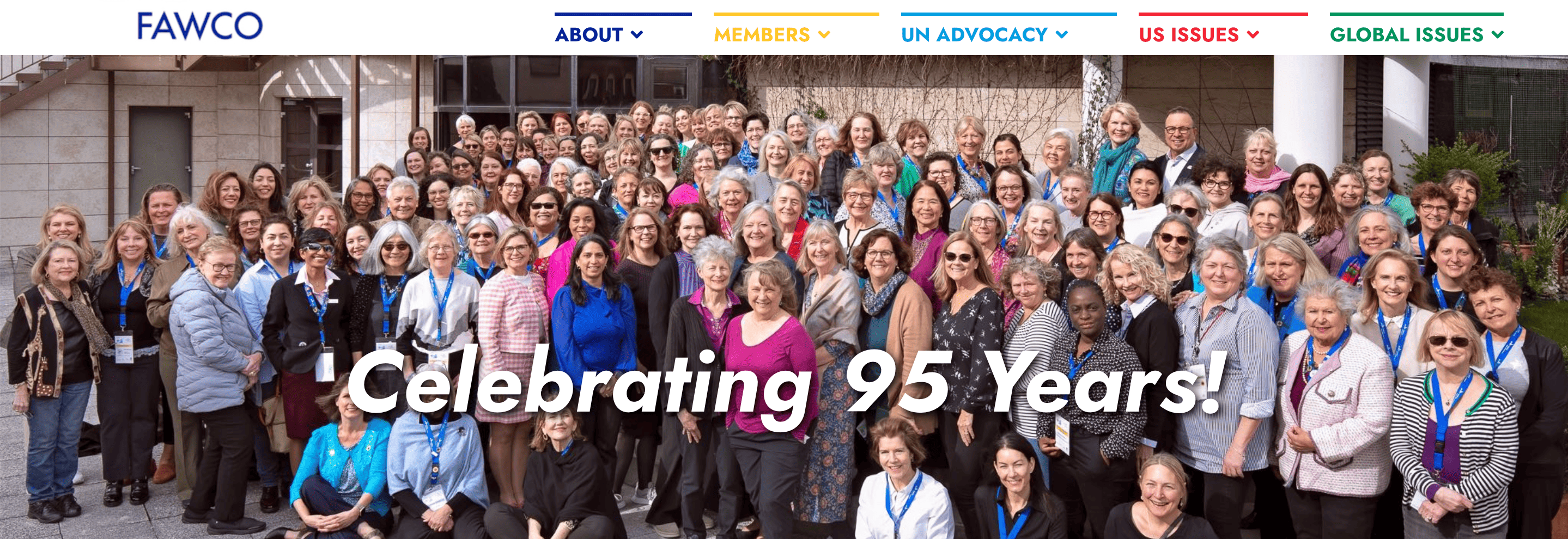
FAWCO is a 95-year-old federation of 58 American Women's Clubs in 29 countries, with sister "International Women's Clubs" (IWCs) operating in nearly every major European city and welcoming women of all nationalities.
The American Women's Club model has been the foundation of expat women's life in European cities since the 1930s: AWC London, the American Women's Club of Sweden, AWC Berlin, AWC Zurich, and dozens more. Many are now FAWCO members. In parallel, sister "International Women's Clubs" welcome women of any nationality — IWC Amsterdam, IWC Berlin, IWC Munich, IWC Paris (Le WIC de Paris), IWC Copenhagen, IWC Stockholm, IWC Barcelona. Together, they are the most established way to plug into multi-generational expat life: book clubs, charity work, cultural outings, language exchange, soft-landing services.
Women of any age looking for a long-running, multi-generational community in their city with a strong cultural and volunteering component.
62 FAWCO clubs in 31 countries; additional IWCs in most major European cities.
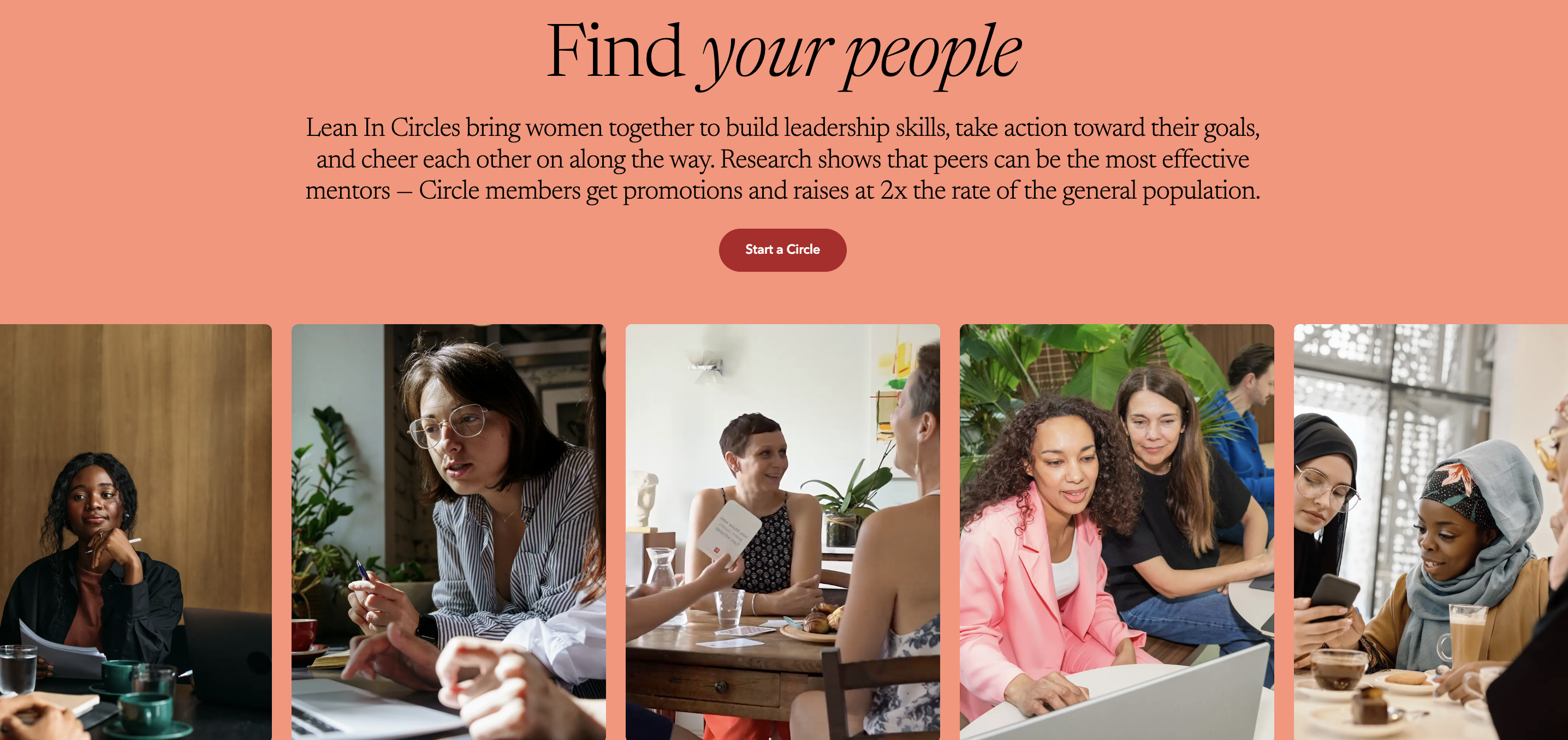
Lean In Circles are small (8–12 women), peer-led monthly groups built around career development and mutual support, with hundreds of active Circles across European cities.
The Lean In Circle model is essentially "book club, but for your career." Each Circle meets monthly, follows a structure (often based on Lean In materials or peer-selected topics), and is run by its members. Amsterdam International is one of the best-known internationally focused Circles in Europe; similar groups exist in Berlin, Barcelona, Paris, London, Madrid, Munich, and most major European hubs.
Career-focused women who want a small, recurring peer group rather than a big network.
Hundreds of cities; most major European hubs have at least one Circle.
Beyond the international networks, almost every European city has a long-running women-focused expat community of its own - often run independently of any global organisation. Many were founded in the 2010s as Facebook or Meetup groups, then grew into more structured organisations with WhatsApp channels, paid memberships, and regular events. These are often the closest to what's actually happening in a given city.
Women who want to commit to one city and want the most active local community.
Find the dominant women's group in your city - usually surfaced quickly with "[city name] international women" or "[city name] expat women" on Facebook or Google.
Almost every major European city.
If you've just moved (or are about to), here's where to plug in first in each city.
The right community depends on what you want.
Most expat women in our community end up using two: one ongoing community (often Les Amis or an IWC/AWC) plus one free network (GGI or InterNations) for breadth.
Each community here solves a different part of the problem. Les Amis was designed around all of them.
Where GGI, InterNations, Lean In, and most local Facebook groups are open signup, Les Amis is application-based: every member is reviewed individually, which is what keeps the signal high.
FAWCO clubs, IWCs, and city-specific groups are organised city by city. Les Amis is one membership that follows you across 12 cities, so when you move from Madrid to Berlin, or split your time between Paris and New York, your community comes with you.
GGI, InterNations groups, and most city groups depend on you converting an online connection into a meeting. Les Amis hosts the meeting - 8–12 women, curated experiences, every week in your city.
PWN and Chief are excellent if your reason for community is professional. Les Amis is for women across life stages and roles who want a broader social circle.
GGI meetups can be 30+ women; AWC events can run into the hundreds. Les Amis caps at 8-12, because that's the group size where real friendship actually forms.
Most communities meet wherever's convenient, while Les Amis experiences happen at five-star landmarks - the world's most recognisable hospitality brands like Mandarin Oriental, Four Seasons, and Nobu - with partners like Zielinski & Rozen (niche Israeli perfumery) and Golden Goose (the Italian label behind the iconic distressed-luxury sneaker) woven into the evening itself, so it feels like something worth showing up for, not just a meetup with a nicer address.
If you want one community that combines the curation of an application-only club, the safety of a women-only space, the depth of a small-group format, and the consistency of an ongoing event calendar - that's what Les Amis is built to do.
.jpg)
The leading women's communities for expats in Europe in 2026 are Les Amis (curated members club with in-person events, 10 EU cities + 2 US), Girl Gone International (large free global women's expat network, 100+ EU chapters), InterNations Women's Activity Groups (women's subgroups within one of the biggest expat networks), PWN Global (professional women's network, 25 city branches across Europe), FAWCO and the International Women's Clubs (long-established multi-city clubs), Lean In Circles (small peer groups, free, global), and a strong slate of city-specific women's networks in each hub.
In most major European cities, expat women build their social lives through a combination of one ongoing community (a members club, an AWC/IWC, or a PWN branch) and one free network (GGI or InterNations) for breadth. Apps like Les Amis and Bumble For Friends are the digital infrastructure that connects them. In our community, women who land well in a new European city almost always plug into at least two of these within the first three months.
Yes - the leading women-only ones are Les Amis (curated, 10 EU cities), Girl Gone International (100+ EU chapters), PWN Global (across 25 European cities), FAWCO and the International Women's Clubs (in most major European cities since the 1930s), and Lean In Circles (peer groups globally). Most also welcome non-binary people; verify per-community.
Barcelona, Amsterdam, and Berlin consistently rank highest for expat women in terms of community size, English-friendliness, and density of organised women's networks. Cities like Munich, Copenhagen, Stockholm, and Zurich have smaller but very high-quality scenes - partly because Les Amis, IWCs, and AWCs are well-established there.
Start with one community that runs in-person events and one network with breadth. Show up to the first three events even if you don't feel like it. The research is consistent: friendships form through repeated, unplanned contact - meaning the same group of women, multiple times, over weeks.
Expat women are one of the groups Les Amis was designed with in mind. The membership works across all 12 of its cities, so if you split time between hubs or move within Europe, your community moves with you. Membership is paid monthly with a one-time joining fee.
An AWC (American Women's Club) is typically a FAWCO-affiliated club originally founded for American women living abroad - many now welcome women of any nationality. An IWC (International Women's Club) is a sister organisation founded explicitly for women of all nationalities. In a city like Amsterdam, both AWC Amsterdam and IWC Amsterdam exist; women often choose based on cultural fit and program mix.
Expat life is a paradox. You moved abroad to do something brave and new - and then immediately spent a year missing your old friends. The shortcut isn't to white-knuckle through that year. It's to plug into the existing women's communities in your city, in the order that fits your life: one in-person community to anchor your week, one wide network for breadth, and one or two city-specific groups for the parts of your life that are very local.
If you want one community that crosses cities, stays curated, and gets you in the room with women you'd actually want to know - that's what Les Amis is for.
We believe that a strong female circle is one of the key components of a successful and fulfilled life for every woman
Your family of girlfriends