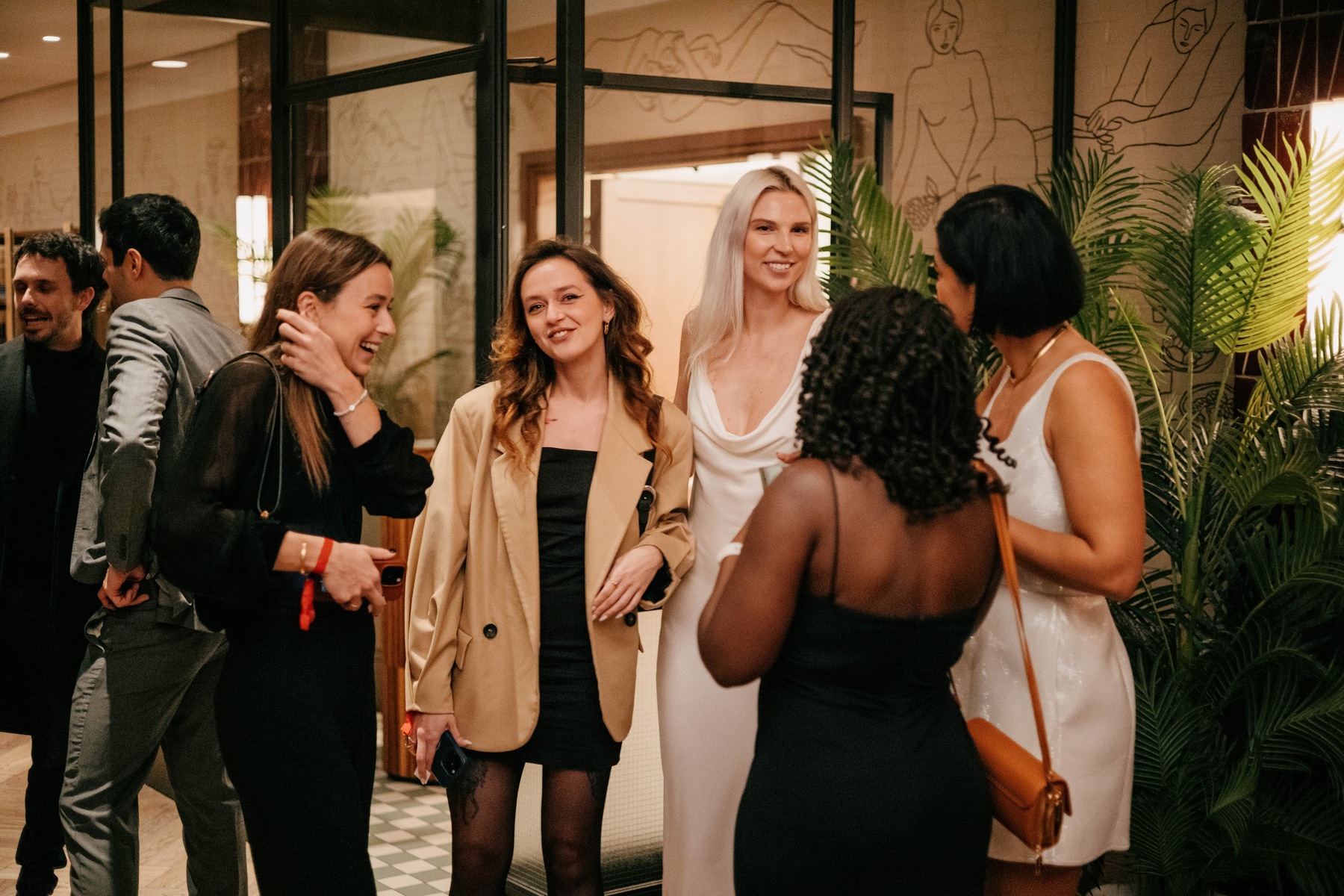
You've just moved to a new city, or your life has shifted shape in some other way - and the social circle that used to come easily isn't there anymore. What you actually need isn't more contacts. It's a structured, reasonably safe way to turn strangers into a real circle. That's the gap women's clubs are built to fill, and the options today look quite different from each other depending on what "club" you're picturing.
A women's club today is a community built around women's shared identity, goals, or interests that offers a structured way to actually meet - events, small groups, or matching - along with norms that make those meetings feel safe rather than random. That structure is the whole point: four benefits show up across nearly every version of this idea worth considering: curated introductions instead of cold networking, consistent touchpoints rather than one-off encounters, affinity-based safety norms that make candid conversation easier, and continuity when life changes, whether that's a move, a new job, or a demanding season.
This isn't a new idea so much as an old one with new infrastructure. Women's clubs in the English-speaking world trace back to literary and self-improvement circles in the 1800s, which grew into federated civic organizations pushing for libraries, public health, and education reform at a scale individual women couldn't manage alone. The names and formats have changed - a Slack channel has replaced the parlor meeting, for instance - but the underlying function hasn't: structured women-only spaces that turn individual effort into something collective, with the trust to make that effort worthwhile.
Worth flagging before you dive in: some communities require applications, operate in a specific set of cities, or admit new members through a scheduled window rather than on a rolling basis, so check current access before assuming a given club is open to you today.
What it is: A members-only women's platform with a private app, curated in-person events, and vetted, application-based admission.
Standout capability: Small, hosted gatherings intentionally capped at 8–12 women, designed for meaningful conversation and faster connection density than a large mixer allows.
Ongoing matching: Once accepted, members are matched 1:1 with another member every two weeks based on shared interests and bio - a built-in, recurring reason to keep meeting new people rather than relying on one good night out.
Portability: One membership follows you across all 12 of its cities in Europe and the US, which matters for movers, frequent travelers, or anyone splitting time between hubs.
Programming variety: Curated experiences such as pottery workshops, yoga and brunch, sunset dinners, art classes, and members-only trips.
Best for: Expat women and ambitious professionals who want structured, in-person friendship with real safety norms, not just an open chat channel.
Main limitation: New members are admitted through a monthly membership window rather than on a continuously rolling basis, so timing matters — applying is straightforward, but it's worth checking current details directly before assuming same-day access.
%20(1).jpg)
What they are: Large communities connecting people living abroad, typically organized by city, with local groups and frequent events.
Standout capability: Scale - a network like InterNations operates in 420 cities worldwide, which makes it easy to plug in almost immediately after a move, including in smaller expat scenes where more curated options haven't yet set up.
Pricing: Typically a tiered membership or per-event fee; the value depends heavily on how active your specific local chapter actually is.
Best for: Newcomers who want a lot of surface-area exposure to meet many people quickly, before narrowing down to a smaller, closer circle.
Main limitation: Lighter vetting and larger group sizes trade off against the depth and safety norms a members-only, curated club can offer. For more on getting oriented quickly after a move, see our guide to the best ways to make new friends when you move to a new city.
What they are: Industry- or function-specific groups offering panels, workshops, and structured mentorship circles.
Standout capability: Direct exposure to senior role models and warm introductions within a specific field - volunteering for a leadership role inside the group can also build real visibility.
Pricing: Dues vary by chapter, and the value you get correlates closely with event cadence and how accessible mentors actually are.
Best for: Women prioritizing career development, a role transition, or building out a founder or investor network.
Main limitation: Social connection outside work topics tends to be limited, and results depend heavily on how active a given chapter happens to be.

What they are: Clubs and apps built around a specific chapter of life (new parenthood, fertility, menopause) that cluster members by shared need and timing.
Standout capability: Immediate shared context cuts through small talk and speeds up genuinely practical support, like childcare swaps or specific advice for that exact stage.
Best for: Women whose day-to-day life currently revolves around that stage and who want peers on the same timeline.
Main limitation: The life-stage focus is also its ceiling - it's not the right fit if you're looking for general, mixed-interest friendships outside that specific chapter of life.
What they are: Recurring meetups built around a shared practice or interest (a weekly run, a monthly book club, a standing art session) with a predictable cadence.
Standout capability: Repeated shared effort and small rituals build trust quickly, and these groups are usually easy to find or start locally without much overhead.
Best for: Women who anchor friendship in doing something together rather than in open-ended conversation.
Main limitation: Depth depends entirely on consistent attendance - without some facilitation, these groups can splinter or fade out.
What they are: Long-standing civic or service clubs, alongside newer social clubhouses, where member programming is tied to a specific physical venue.
Standout capability: Strong local roots, volunteer projects, and venue-based rituals that build a genuine sense of belonging to one particular place.
Best for: Women seeking multigenerational community and real civic engagement in a specific city, rather than a portable or online-first option.
Main limitation: Membership criteria, waitlists, and city-bound access can all limit flexibility if you move often.

We weighed each type against five practical dimensions: depth versus breadth (small-group design and matching cadence against large-scale exposure), safety and norms (application or vetting processes, women-only spaces, hosted events), portability and availability (cross-city access and whether admission is rolling, scheduled, or closed), programming fit (whether the format - workshops, dinners, trips, talks - actually matches your goal, whether that's friendship density or career growth), and time and cost realities (whether the cadence is one you can actually commit to, and whether a given chapter's activity level justifies its dues). For a deeper look at how in-person, curated formats compare with app-based discovery specifically, see our comparison of app-based versus in-person friendship building.
A: Women's clubs add vetted norms, women-centered programming, and generally safer spaces for candid conversation than an open, mixed-gender social group typically offers. An application process or a hosted event format also tends to reduce drop-off and increase follow-through, since there's more structure holding the group together than goodwill alone.
A: Typically, you share who you are and what you're looking for as part of applying. Once approved, most clubs send onboarding details and access to their programming or app. It's worth checking a club's current admission process before applying, since some open membership on a rolling basis and others, like Les Amis, admit new members through a scheduled window rather than continuously.
A: Some communities offer one membership that follows you across multiple hubs, which is ideal if you relocate often or split time between cities. Before relying on that portability, verify which specific cities are actually active - Les Amis, for example, spans 12 cities across Europe and the US, and coverage like that varies a lot between clubs.
A: Smaller caps, somewhere around 8 to 12 people, tend to keep conversation cohesive and prevent a group from splintering into side conversations that never fully include everyone. Hosted formats with a recurring cadence improve on that further, since the same small group of faces showing up repeatedly is what actually builds a relationship, not a single well-run event on its own. Once you've settled on the type of club that fits, our guide to finding your circle covers the practical next steps.
If you're weighing structure against depth, the short version is this: broad networks get you into a city fast, hobby groups and professional associations solve a specific slice of the problem, and curated, small-group clubs like Les Amis are built for the harder part - turning a first meeting into an actual, ongoing circle. Les Amis runs on exactly that model: application-based admission, events capped at 8-12 women, and a membership that follows you across its 12 cities in Europe and the US.
Join nowWe believe that a strong female circle is one of the key components of a successful and fulfilled life for every woman
Your family of girlfriends