You need a candid read on a hiring decision, a fundraising number, or a product pivot - the feedback that only comes from someone who's actually built something. The problem is most "founder communities" turn out to be one of two things: nearly inactive, or so broad that a specific question gets buried in a wall of general encouragement. Here are 10 vetted communities that actually deliver peers, accountability, and signal instead of noise - who they're best for, what makes each one worth your time, and where each one falls short.
To set expectations for the landscape overall: across the 22 female founder communities tracked by Hive Index's directory, 13 (59%) are free to join and 9 (41%) require payment, an application, or both. Slack and Skool are the most common platforms, at 4 listings each, followed by Discord, Facebook, and LinkedIn at 2 each, and Circle and Reddit at 1 each. Reported community size varies enormously: median size across listings with member data is around 750, but the largest reach into the tens of thousands.
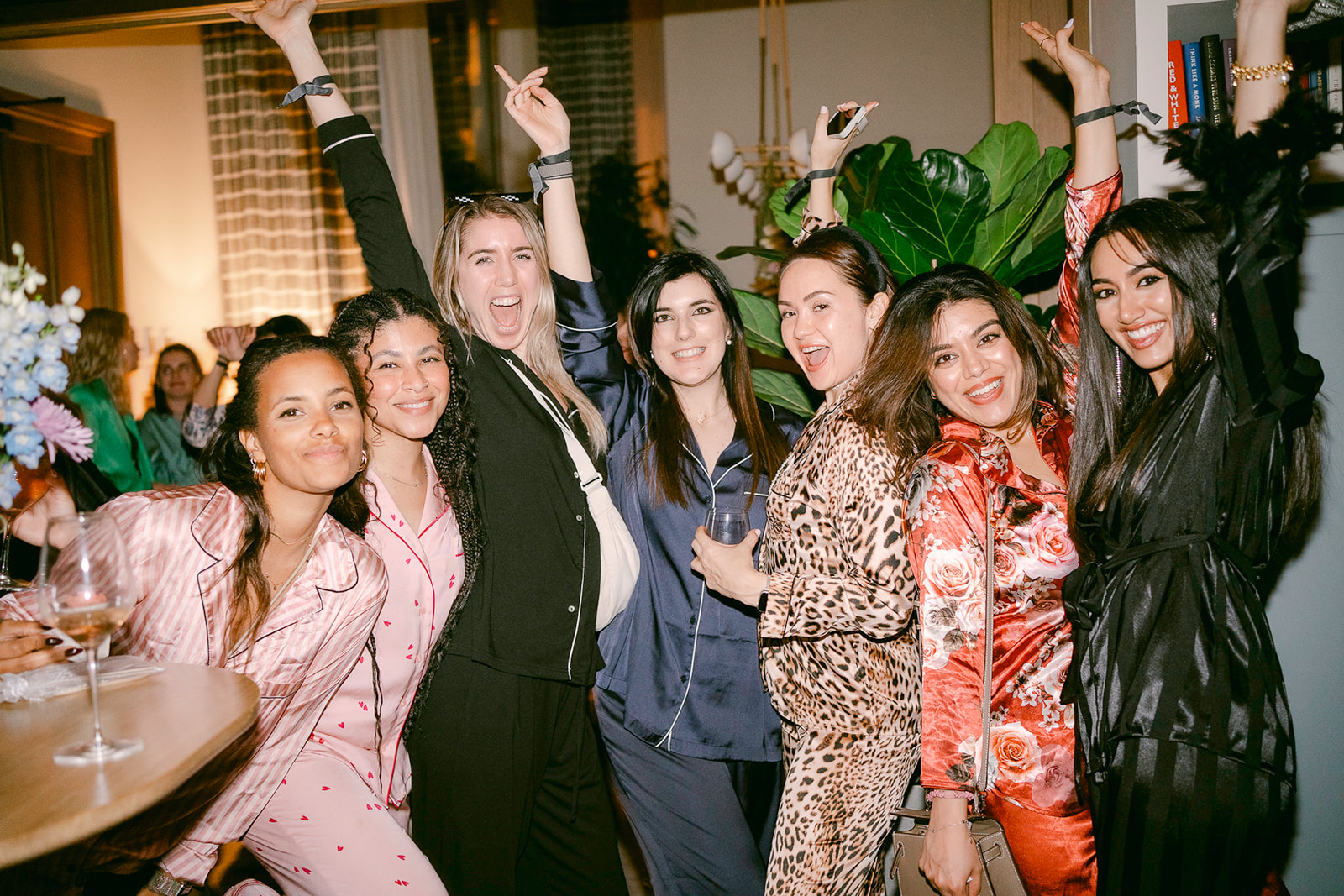
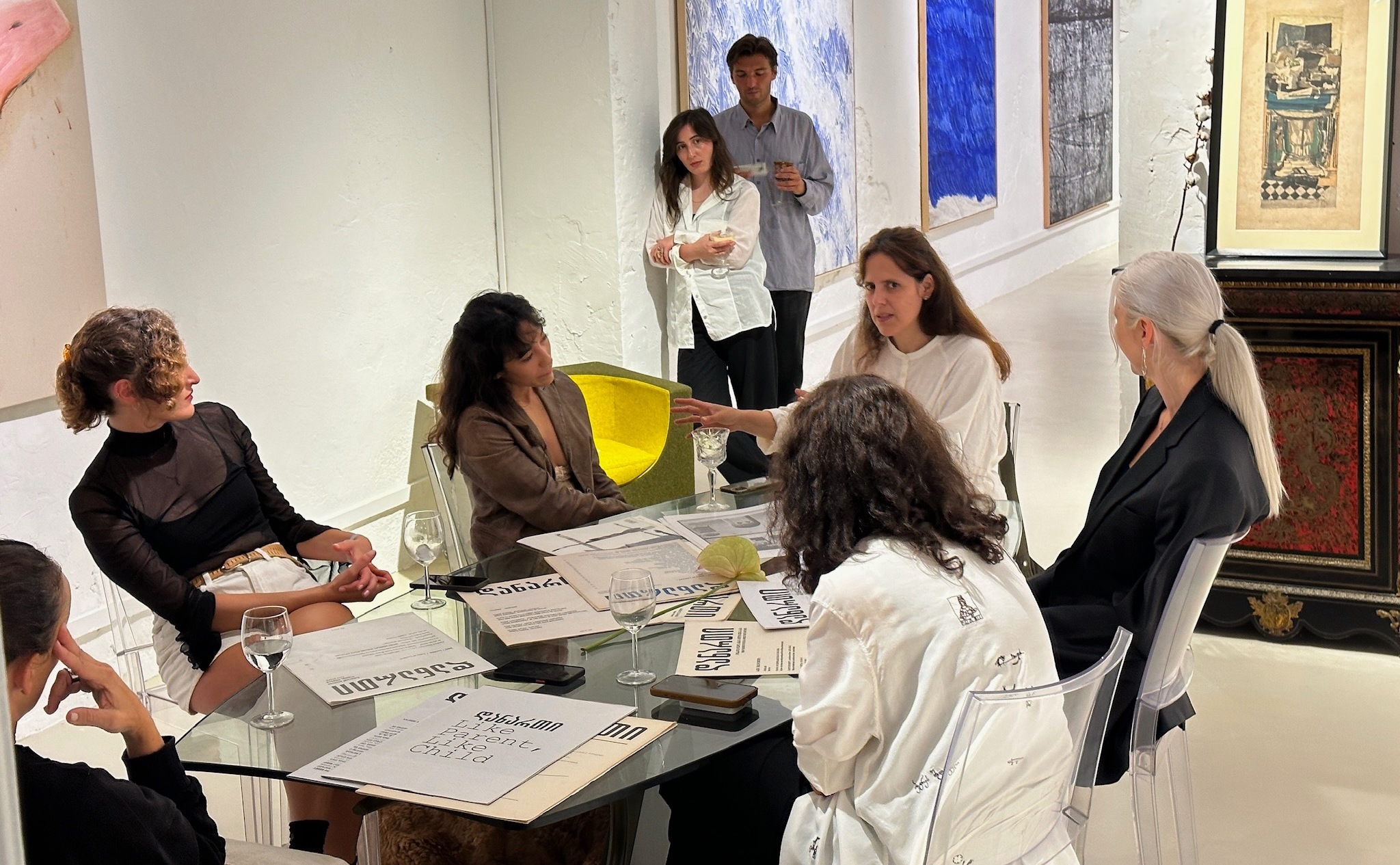
We're leading with Les Amis because it takes a different approach from the rest of this list: instead of a chat channel or forum, it prioritizes curated, small-group in-person connection and a biweekly 1:1 introduction - a structural difference worth understanding before you assume every "community" here works the same way.
%20(1).jpg)
What it is: A members-only platform for ambitious women, built around curated real-life experiences and a private app for staying connected between events.
Standout capability: Small-group events intentionally capped at 8–12 women, designed to foster deeper relationships than a large mixer or an open chat channel allows.
Pricing: Membership is monthly, and one membership works across all 12 of its cities - a joining fee may apply, so confirm current pricing on the site rather than assuming a figure.
Best for: Women who want vetted, in-person friendship and founder support across European hubs and select US cities. Because membership travels with you across cities, it holds up well specifically through relocations, which most of the other communities on this list don't address at all.
Main limitation: Availability is city-based, and Les Amis currently has a waitlist of applications, so admission is curated rather than instant - set your timing expectations accordingly.
See current cities and apply → · More on how Les Amis compares to other women's communities · More on its matching model versus other apps
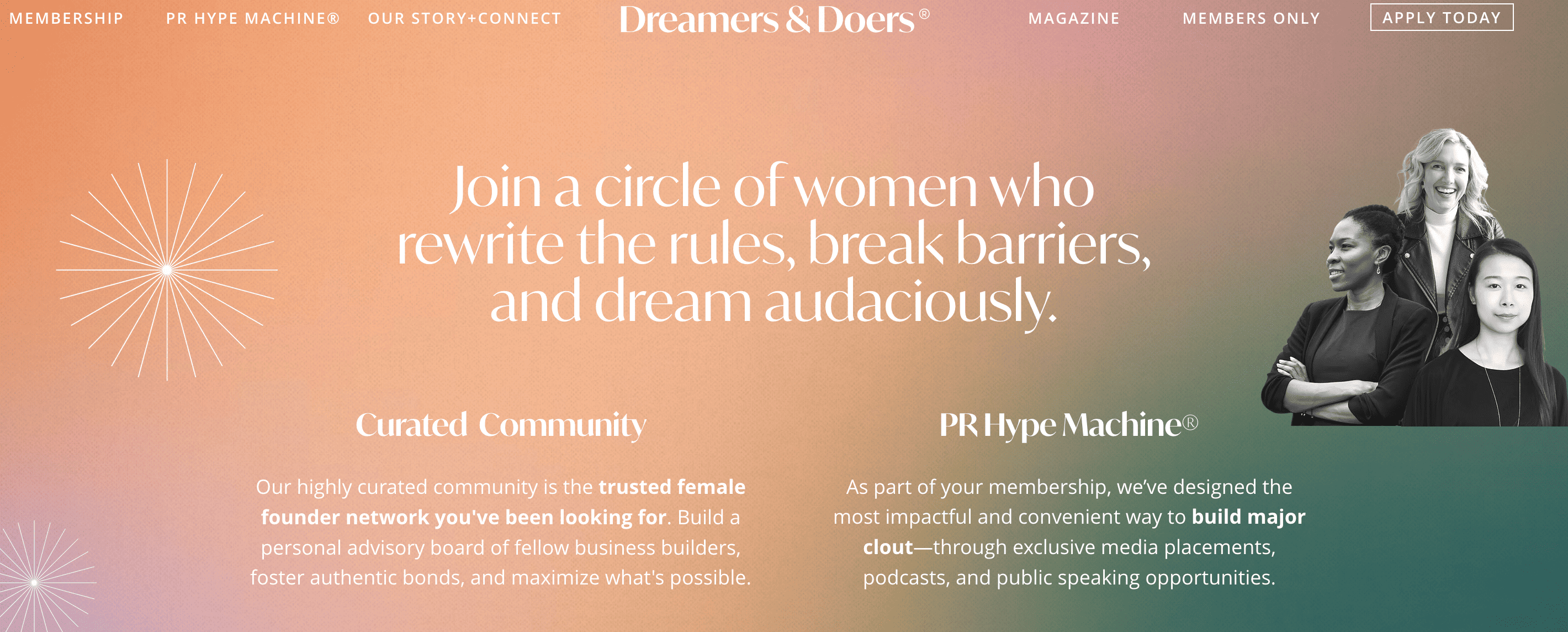
What it is: An award-winning community and self-described "PR Hype Machine" for women entrepreneurs and leaders, hosted on Circle, offering members-only resources and opportunities.
Standout capability: Members-only PR and visibility programs - media placements, podcast and speaking opportunities - layered on top of standard community access.
Pricing: Paid, application-based membership; exact tiers and amounts vary and should be confirmed directly with the community.
Best for: Founders seeking network effects plus media exposure and structured resources, not just peer chat.
Main limitation: At roughly 800 members, it's smaller than the mass-open groups on this list, which trades some serendipity for higher relevance per member.
What it is: A premium Slack community for female founders that grew out of a widely read newsletter on women in tech and venture capital.
Standout capability: Access to curated operator and investor discussions inside a smaller, higher-signal Slack space rather than a large, general forum.
Pricing: Paid membership; confirm current pricing directly, since it isn't publicly listed in detail.
Best for: Women building in tech or venture who prefer a focused, high-signal Slack room over a sprawling general community.
Main limitation: At around 750 members, its footprint is intentionally small compared with the tens-of-thousands-strong social groups also on this list.
What it is: A large Facebook group where women founders ask for support, share resources, and vent about the realities of running a startup.
Standout capability: Immediate reach: the openness of a Facebook group means a question can get responses fast, from a wide range of founders at different stages.
Pricing: Free to join.
Best for: Early-stage or first-time founders who want quick, broad peer input rather than a narrower, curated circle.
Main limitation: The scale and openness that make it fast also mean a signal-to-noise tradeoff - moderation and thread quality vary, so depth isn't guaranteed on any given post.
What it is: A Discord-hosted sisterhood of high-achieving women focused on amplifying women's voices, visibility, and influence toward more equitable environments.
Standout capability: Large-scale reach specifically oriented around visibility and purpose-driven initiatives, not just business tactics.
Pricing: Requires an application; cost isn't listed publicly, so confirm directly.
Best for: Founders who value movement energy and advocacy alongside practical business support.
Main limitation: At around 40,000 members, its scale is a strength for reach but works against the kind of intimacy a smaller, curated group can offer.
What it is: A subreddit for discussing, celebrating, and encouraging people in the business world, with a sizeable and active membership.
Standout capability: Candid Q&A and a searchable post history, without the platform lock-in of a private Slack or Discord - anyone can search past threads for a similar problem.
Pricing: Free to use.
Best for: Founders who want a broad range of perspectives and prefer the relative anonymity Reddit allows for sensitive questions.
Main limitation: Content quality varies thread to thread, as it does on any open forum of roughly 20,000 members.
What it is: A LinkedIn group for entrepreneurs and women in business focused on mutual support, resource sharing, and promoting each other's work.
Standout capability: LinkedIn-native visibility: activity in the group connects directly to your professional profile, which can matter for credibility and discovery.
Pricing: Free to join, consistent with typical LinkedIn group norms.
Best for: Founders leveraging LinkedIn for hiring, warm introductions, and credibility signals tied to their public profile.
Main limitation: Engagement fluctuates the way most LinkedIn groups' does; at around 20,000 members, activity can be uneven from week to week.
What it is: A Slack community that started as an accountability-themed meetup for indie women founders and grew into an ongoing chat-first group.
Standout capability: A lightweight, chat-first accountability rhythm, built for regular check-ins rather than long-form forum posts.
Pricing: Listed as free; confirm current terms on the community's own listing.
Best for: Solo or indie founders who benefit more from frequent, small check-ins than from a large forum to browse.
Main limitation: At around 221 members, its small size limits breadth of perspective, though it increases the odds you'll actually recognize names over time.
What it is: A community for women entrepreneurs and makers built around forum-style discussion, peer feedback, and shared milestones.
Standout capability: A supportive maker culture with real feedback loops - a calmer alternative to the higher-volume social groups on this list.
Pricing: Not listed publicly.
Best for: Designers, indie hackers, and other product-led founders looking for peer critique rather than general encouragement.
Main limitation: Discoverability and overall scale are modest next to the largest social-media megagroups, which means less immediate reach.
What it is: A platform for ambitious women broadly - entrepreneurs, freelancers, side-hustlers, and career professionals - built around questions, ideas, and connection.
Standout capability: Cross-pollination between operators and founders, plus events and job-related content that a founder-only space wouldn't carry.
Pricing: Not listed publicly.
Best for: Multi-hyphenate founders who move between a day job, freelance work, and their own venture, and want a community that reflects all of that.
Main limitation: Its breadth, spanning far more than just founders, can dilute founder-specific depth relative to a narrower, niche group.
We anchored on Hive Index's female founder directory to ground platform, feature, member-count, and free/paid data across the 22 communities it tracks, rather than relying on impressions alone. From there, we prioritized diversity of format (curated in-person experiences, Slack and Discord chat, and open forums or social groups) plus a mix of sizes, from small circles under 250 members to open groups in the tens of thousands. We favoured communities with a clearly stated purpose and visible activity signals, and where pricing wasn't publicly listed, we said so directly rather than guessing. Les Amis is featured first with first-party specifics on its city coverage, event size caps, and matching cadence, since it represents a structurally different model from the chat- and forum-based options that dominate the rest of the list.
Q: How do I choose between a small, curated group and a large open community?
A: Pick small and curated if you want depth and real accountability; pick large and open if you want discovery and fast reach on a specific question. The gap is significant: median reported size across founder communities is around 750 members, but some groups run into the tens of thousands, and the dynamics at each end are genuinely different. If you're relocating or new to a city, a curated, city-based group with small, capped events, like Les Amis, can accelerate real relationships faster than an open online forum can. See our full FAQ for specifics on how membership and applications work.
Q: Which platforms host the most female founder communities?
A: In Hive Index's directory, Slack and Skool each host 4 of the tracked listings, Discord and Facebook and LinkedIn each host 2, and Circle and Reddit each host 1. Pick based on your own working style: Slack suits real-time, ops-style chat; Skool and Circle lean toward structured courses or forums; Discord tends to carry more of a community "vibe"; and social platforms like Facebook, LinkedIn, and Reddit maximize reach over intimacy. For a broader look at swipe-based versus curated, event-based discovery generally, see our comparison of Bumble BFF alternatives.
Q: Are most female founder communities free or paid?
A: In Hive Index's directory, 13 of 22 (59%) are free to join, while 9 of 22 (41%) require payment, an application, or both. Paid or application-based communities generally trade some scale for curation and structured programming, so it's worth weighing that trade-off against what you're actually trying to get out of the group.
Q: What does Les Amis offer that online-only groups don't?
A: Les Amis is built around in-person, small-group experiences intentionally capped at 8–12 women, plus a biweekly 1:1 introduction designed to build real friendships faster than an open chat channel typically does. Coverage spans 12 cities (ten in Europe plus Austin and New York) with one membership working across all of them, which helps if you relocate or split time between hubs.
Join nowWe believe that a strong female circle is one of the key components of a successful and fulfilled life for every woman
Your family of girlfriends