
Whether you've just moved to a new city or simply outgrown the friend group you had five years ago, the problem is the same: making adult friendships happen requires deliberate structure and repeated contact, not luck. The average adult hasn't made a new friend in five years, which is exactly why a growing set of apps now exist specifically to solve this.
This guide compares five standout options women actually use, each with who it's best for, its signature strength, and a candid limitation. One note before you start: apps help you discover people, but closeness takes shared hours and follow-through, not just messages back and forth, and every first meeting should be planned with safety in mind, in a public place. We cover exactly how further down.
%20(1).jpg)
What it is: A vetted, members-only women's community that emphasizes in-person friendship through recurring small-group events rather than open-ended chat.
Standout capability: Gatherings are intentionally intimate, built around small-group in-person events with 8–12 women per gathering - a size that encourages faster rapport and reduces first-meet anxiety compared to a large mixer or an open swipe deck.
Best for: Women who want structured, real-life circles over endless chat - a good fit if you value being matched and having a hosted plan to actually meet, rather than managing the whole process yourself.
Practical proof: Friendships can start noticeably cooling within just a few months of no contact at all, which is exactly why recurring, low-stakes meetups, not one great conversation, are what actually build a circle.
Main limitation: Membership is application-based and city coverage varies, so admission and local event availability aren't guaranteed everywhere.
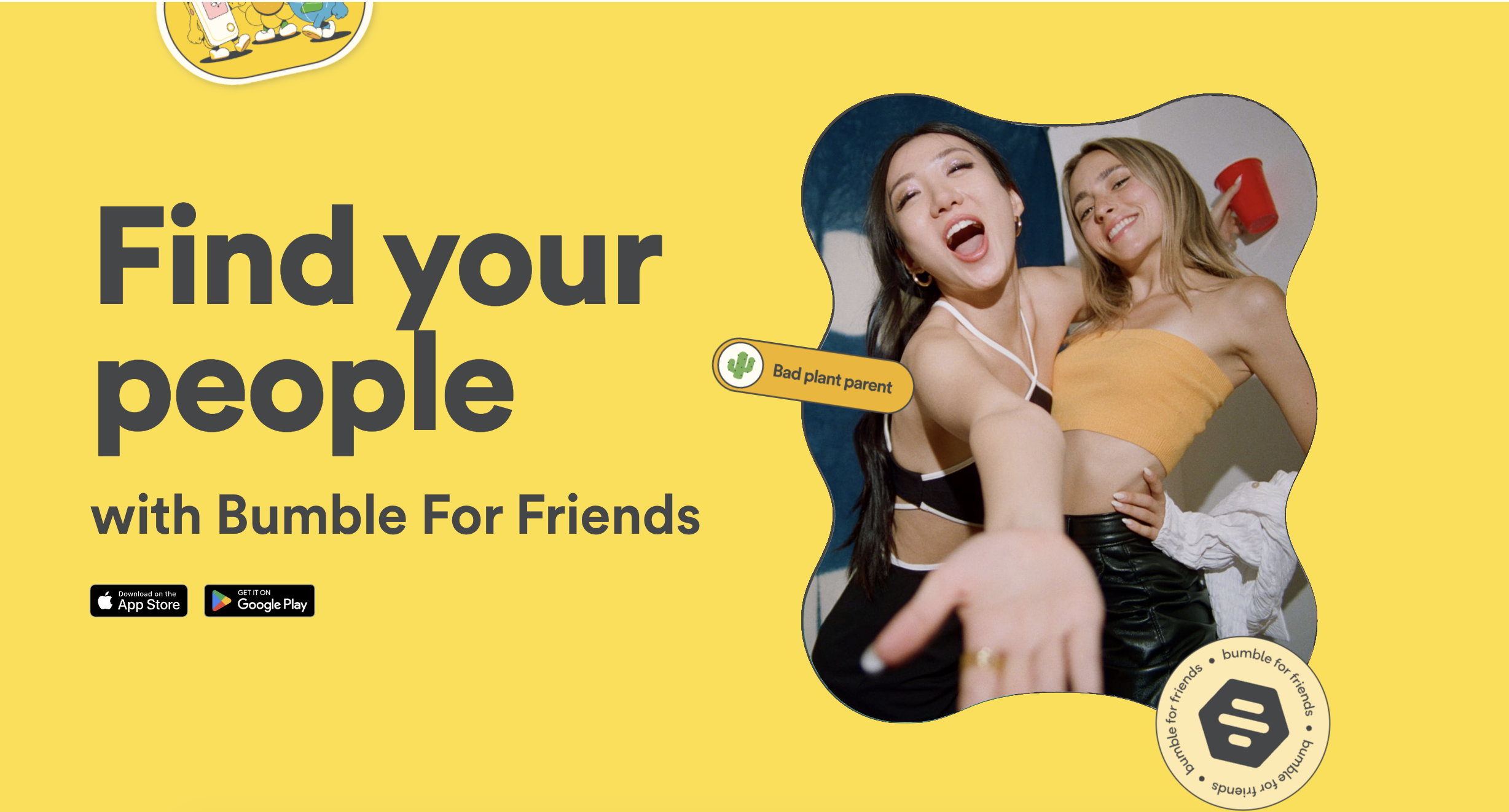
What it is: Bumble's dedicated friend-finding experience, built as its own BFF app with a People tab for browsing nearby women and Groups you can join around shared interests.
Standout capability: Quick, profile-led discovery - the People tab is designed specifically to help you meet new friends in your area, alongside interest-based Groups for a lower-pressure entry point.
Best for: Women who want scale and speed. It's a strong fit if you're comfortable initiating chats and arranging your own first meetup rather than having one arranged for you.
Safety edge: Bumble's own guidance is direct: choose a public place for your first meeting, like a coffee shop or restaurant.
Main limitation: A large pool can mean more swiping and less built-in depth: plan a clear, public first step to filter for real intent rather than letting conversations drift indefinitely. For more women-focused options in the same category, see our comparison of the best Bumble BFF alternatives.
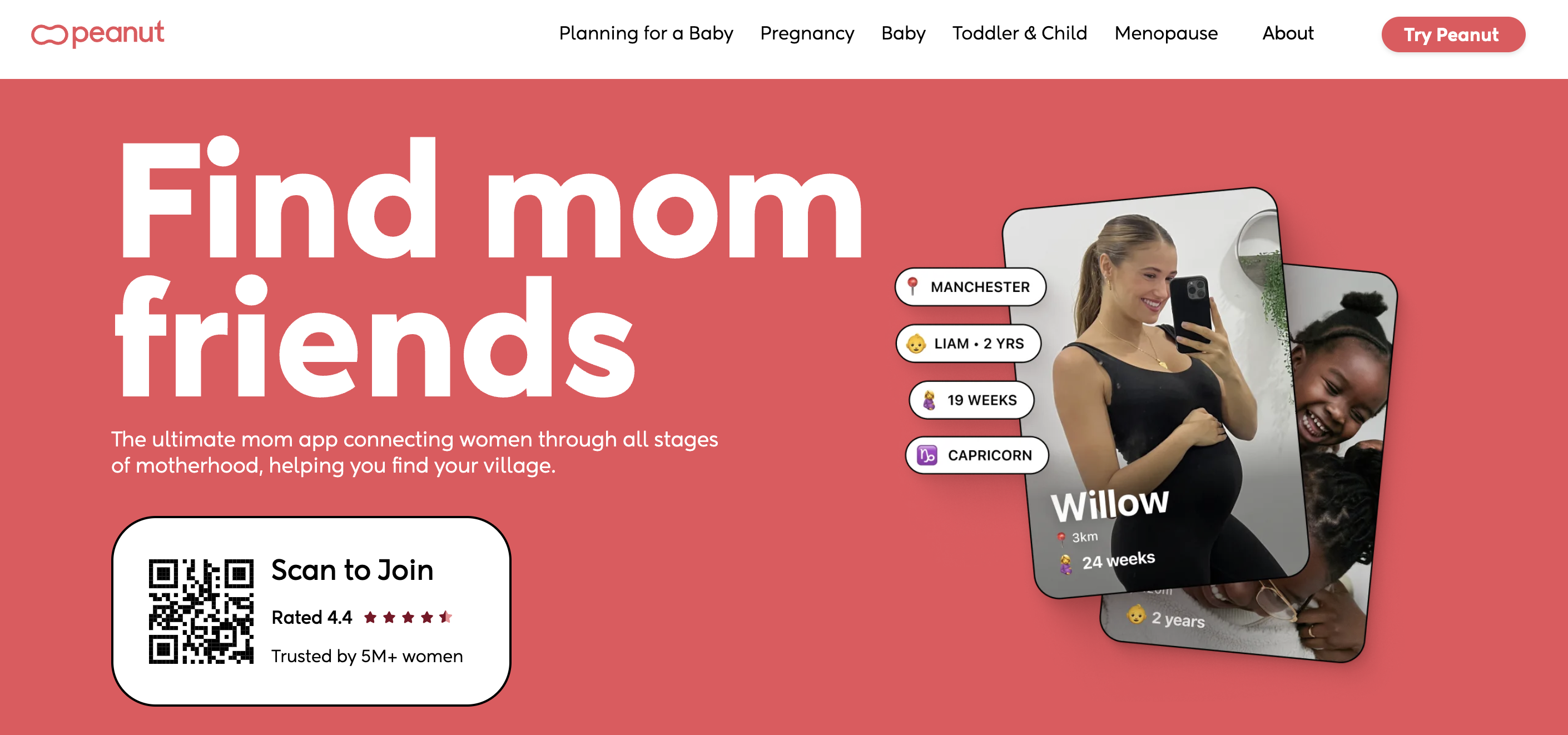
What it is: A women-only community built around fertility, pregnancy, motherhood, and menopause, connecting you with women navigating the same season rather than matching on general interests.
Standout capability: Whether you're navigating fertility, pregnancy, motherhood, or menopause, the app provides access to a community there to listen, share information, and offer practical advice specific to that stage.
Best for: New moms, moms-to-be, women trying to conceive, or women navigating menopause who want empathy and practical support, locally or online.
Main limitation: The life-stage focus is also its ceiling - it's not the right fit if you're looking for general, mixed-interest friendships outside that specific chapter of life.
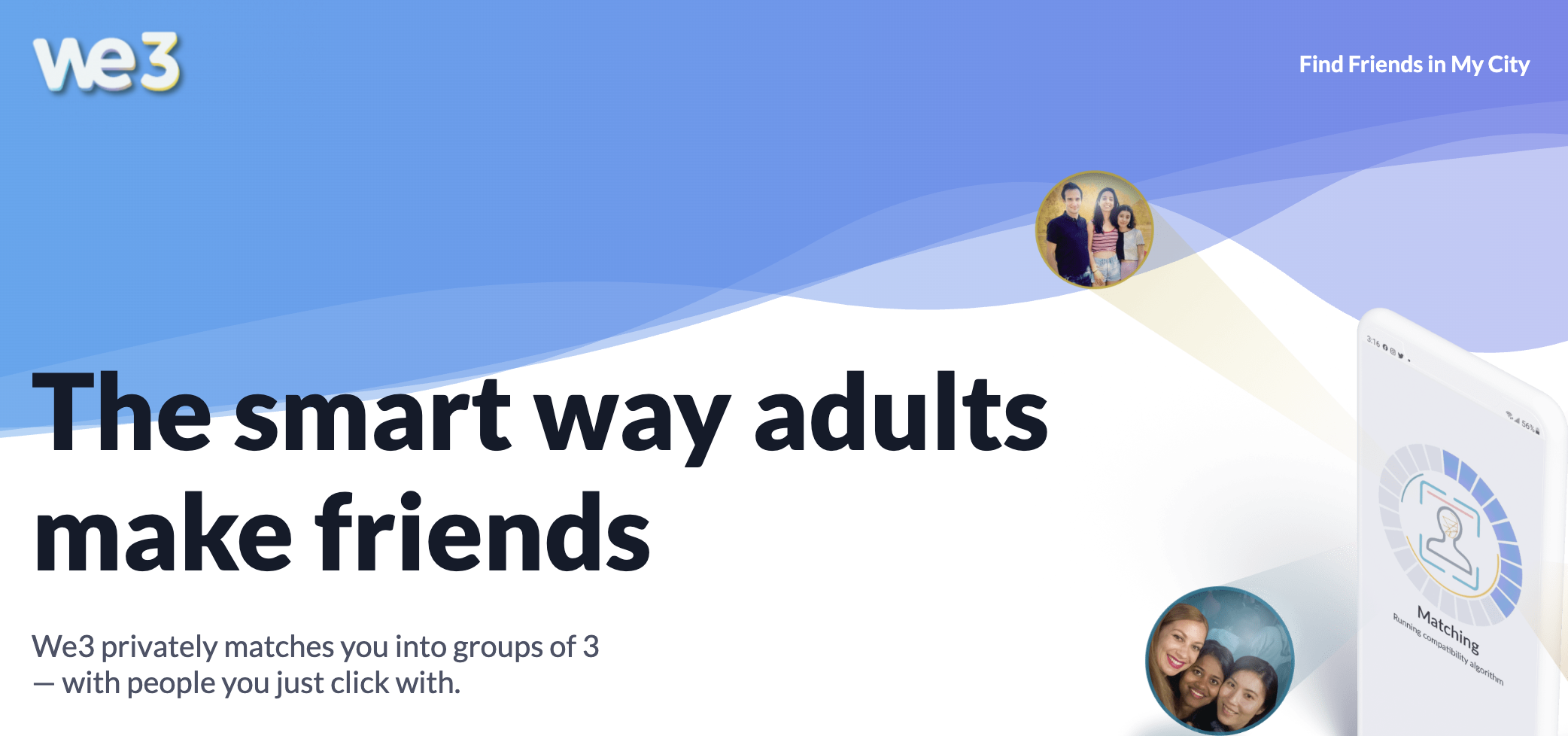
What it is: An app that matches you into a trio of three women based on a psychographic quiz rather than a photo-first browsing stack, with an optional filter to match with women only.
Standout capability: The trio format spreads out the pressure of a first meeting - you're never alone with a single stranger - and profiles stay private, visible only to the people you've actually been matched with.
Best for: Women who find one-on-one first meetings higher-stakes than they need to be, or who'd rather answer a quiz once than browse an endless stack of profiles.
Main limitation: Because matching happens in trios rather than 1:1, you have less control over exactly who you're introduced to, and the format leans more casual than structured, ongoing programming.

What it is: A platform for joining or starting local groups built around a shared interest: hiking, crafts, language exchange, professional networking, and far more.
Standout capability: Recurring events create built-in touchpoints with the same people over time, which matters because closeness typically requires far more shared time than a single hangout provides.
Best for: Women who make friends best by "doing" something together and want a preplanned calendar that removes the burden of organizing plans yourself.
Main limitation: It's not women-only, and group culture varies a lot from one organizer to the next - sample a few different groups before committing to one as your regular.

Matching is the easy part - the follow-through is what actually determines whether a new connection becomes a real friendship.
For more on why this kind of consistency matters even before you've matched with anyone, see why a strong female circle matters more than most people think.
A: Start with options where the first step is a small, hosted event, like Les Amis' intimate group gatherings, or a low-pressure group format like We3's trios, rather than an open 1:1 chat with a stranger. When you do plan a one-on-one, keep it short and public. Interest tags and prompts also help by pre-screening for shared topics, so the first conversation has built-in material rather than starting from zero.
A: Research on adult friendship formation found it takes roughly 50 hours of shared time to move from acquaintance to casual friend, about 90 more hours to reach simple "friend" status, and more than 200 hours total before someone becomes a close friend. The practical takeaway: stack small, recurring meetups rather than waiting for one conversation to do all the work.
A: As a rough guide: close friends benefit from contact roughly every one to two weeks, mid-tier friends can run on monthly contact, and your wider circle can hold up fine on a rhythm of every one to three months. Batching social time with small groups is a practical way to maintain several connections at once without it taking over your calendar.
A: Meet in a public place, like a coffee shop or restaurant, and set a defined start and end time so neither of you feels obligated to stretch it out. It's also worth sharing the plan with a trusted contact and checking in afterward, and trusting your instincts enough to leave if something doesn't feel right.
None of these five apps solves the same problem the same way, which is exactly the point: Bumble For Friends for scale and speed, Peanut for a specific life stage, We3 for lower-pressure group matching, Meetup for activity-based recurring contact.
Every one of them gets you the introduction. The unglamorous part comes after: a public first meetup, a specific follow-up invite, and months of repeated contact. That's where most friendships quietly stall, and it's the exact gap Les Amis was designed to close. Application-based matching brings the right women together, and a recurring calendar of small-group experiences keeps them in the same room long enough for a friendship to form.
Join nowWe believe that a strong female circle is one of the key components of a successful and fulfilled life for every woman
Your family of girlfriends