A "women's lifestyle club" can mean very different things: a clubhouse with a spa and a rooftop, a roving programme of talks that changes venue every week, or a community that follows you from city to city. They all promise connection, but only some are built to produce friendship, and the difference comes down to a few design choices: how many women are in the room, how often you see the same ones, how selective admission is, and whether the club still works if you leave the city where it started.
So a "women's lifestyle club" is a curated community, sometimes with a physical clubhouse, sometimes not, built around friendship, support, and personal growth rather than pure networking or co-working. Below is an at-a-glance comparison, followed by a consistent profile for each: what it is, its standout capability, pricing where available, who it's best for, and one honest limitation. One pattern worth noting going in: the clubs that work best tend to run small, regular gatherings (8 to 12 people) and keep members in touch every month or so, rather than relying on big one-off events.
Of the eleven clubs below, one is built specifically around the thing most women are actually after: friends who stay - it's Les Amis. Most women’s clubs give you somewhere to go, whereas Les Amis gives you a circle that keeps meeting, and because one membership works in every city it operates in, that circle doesn’t reset when you move.
The other clubs on this list are worth knowing too, and each does something different well. Here’s how they compare.
Four things mattered most in putting this list together.
%20(1).jpg)
What it is: Les Amis is a members-only women's community offering curated in-person events and smart matching across Europe and the US, with application-based membership and in-app chat to keep momentum between meetups.
Standout capability: Events are intentionally capped at 8 to 12 women to avoid splintering and keep conversation genuinely deep rather than scattered across a crowded room.
Pricing: A paid monthly membership plus a one-time joining fee, disclosed directly by Les Amis.
Best for: Ambitious women who are new to a city or rebuilding a circle and want swipe-free, biweekly introductions alongside events that travel with them - Les Amis runs across 11 European cities plus Austin and New York, 13 in total.
Main limitation: There's no permanent clubhouse - experiences rotate across premium venues city to city rather than living in one on-site facility. But that’s easy to turn into an advantage: it’s exactly why one membership gives you access to events in every city where Les Amis operates, so your community goes wherever you do.

What it is: A women's club built around talks and salons, with venues that change to keep the format fresh and the conversation wide-ranging.
Standout capability: Frequent, speaker-led events that create fast introductions among thoughtful, curious peers.
Pricing: Positioned as more accessible than many clubhouse-based clubs, though specific figures aren't consistently published.
Best for: Culture lovers and debate-friendly joiners who'd rather talk ideas than use on-site amenities.
Main limitation: The roving format trades the predictability of a fixed clubhouse schedule for variety, and its events are centred on London, so it won’t travel with you if you move.
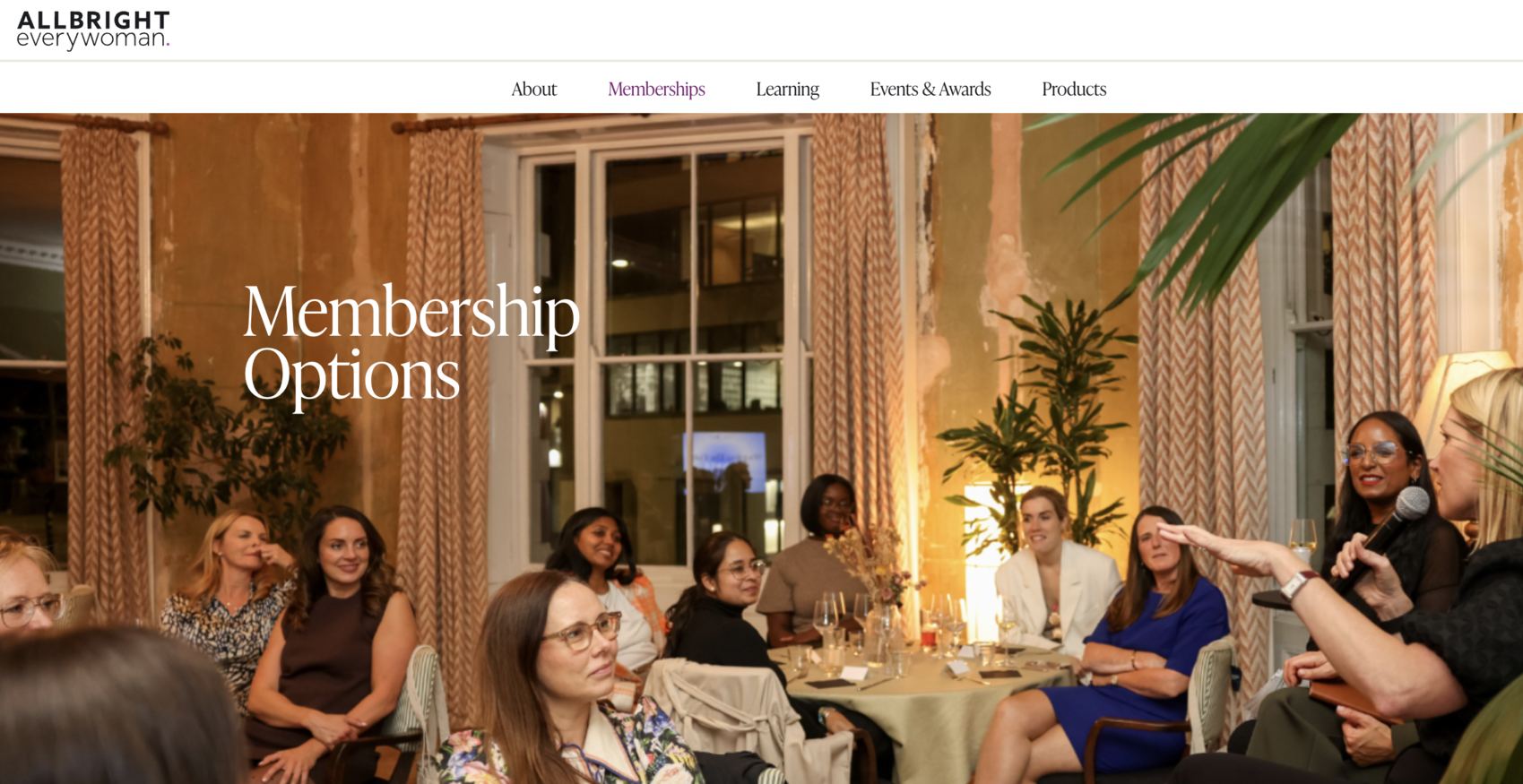
What it is: A women’s career network founded in 2018 and now operating as AllBright everywoman, with 45,000+ members. Its individual membership runs through Ascende, an online learning and development platform, in two tiers: Core and Connect.
Standout capability: Ascende gives members weekly online classes, mentor matching, an AI coaching assistant, and over 250 hours of learning content. Connect adds one exclusive in-person member event a month (except August and December), discounted tickets to flagship events like the Step Forward Summit and Live Well Festival, brand discounts, and exclusive rates at spaces such as Mortimer House and 1 Warwick.
Pricing: Two individual tiers: Ascende Core at £150 a year and Ascende Connect at £350 a year, both including VAT. Corporate and SME memberships are priced separately.
Best for: Professional women who want career development, mentoring, and learning, with Connect adding in-person networking on top.
Main limitation: The offer is career-led, and the in-person events (one a month, held at venues across London) aren’t recurring small-group time with the same women, so it does less to build close friendships than a community designed around that. Core is entirely digital.

What it is: A women's community founded in 2016, organized into five divisions so members can match into whichever interest - social, adventure, culture - suits them.
Standout capability: Experiential, confidence-building activities that mix genuine fun with learning a new skill.
Pricing: Not consistently published; treat any specific figure with caution.
Best for: Joiners who bond fastest through doing - retreats, workshops, and hands-on challenges.
Main limitation: Programming intensity can vary by season, some events carry costs beyond base membership, and its footprint is limited to a couple of cities (currently London and Dubai), so it suits women who stay put better than women who move often.
What it is: A selective club built around collaboration among senior operators, creatives, and high-profile members.
Standout capability: Curated introductions inside a genuinely influence-rich circle.
Pricing: Typically premium; exact figures aren't consistently published.
Best for: Accomplished women looking for a tight, high-caliber network rather than a broad one.
Main limitation: Its exclusivity limits access - about 4% of members are reportedly royalty, which signals just how rarefied the tier is.
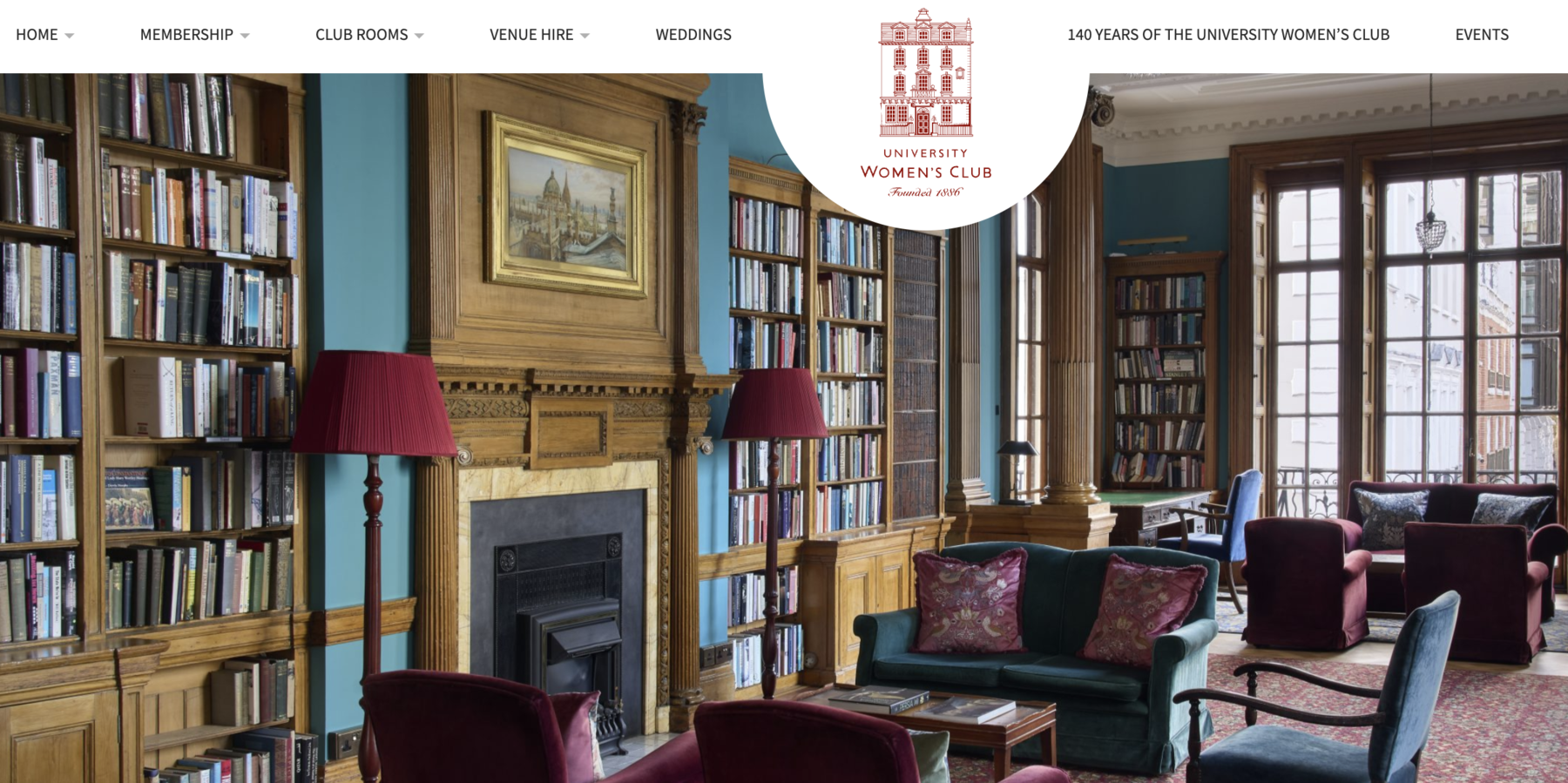
What it is: A long-standing club for educated women, built around lectures, culture, and community in a heritage setting.
Standout capability: An intergenerational community with programming steeped in tradition rather than trend.
Pricing: Positioned as mid-tier where disclosed; treat unsourced figures with caution.
Best for: Women who value formal culture programming and reciprocal club ties.
Main limitation: The formal style can feel traditional next to newer, more mobile communities, and with a single clubhouse in London it only pays off if you’re based nearby.
What it is: A private women's club in downtown Toronto combining networking, dining, spa and fitness facilities, and boutique-hotel-style offerings.
Standout capability: One-stop amenities that cover meetings, workouts, and relaxation under a single roof.
Pricing: Historically premium; exact current tiers vary.
Best for: Members who want a physical home base with everything on-site.
Main limitation: It’s a single-city club in Toronto, so membership only pays off if you live there, and the cost and location limit how often non-locals can use it.
What it is: A London wellness-led women's club offering spa, fitness, and expert-led talks alongside its community programming.
Standout capability: Integrated wellness services paired with genuinely expert health content, not just amenities for show.
Pricing: Historically premium; the club has previously targeted a goal of 700 members, which gives a sense of its scale.
Best for: Women who want health and wellbeing at the actual center of their social life, not an afterthought.
Main limitation: The wellness focus can feel specialized next to clubs built around general socializing, and as a London-based club it doesn’t follow you if you relocate.
What it is: A women's community built around flexible access to events through an online hub, rather than a fixed physical space.
Standout capability: Accessible membership with a broad variety of events to choose from.
Pricing: Generally positioned as more affordable than clubhouse models.
Best for: Budget-minded joiners who want to test the waters before committing to a premium club.
Main limitation: Fewer fixed physical spaces means community quality can vary noticeably from city to city.
What it is: A Paris-based club oriented toward international women, built to foster genuine cultural exchange.
Standout capability: A globally mixed membership that widens both perspective and network in a way single-nationality groups can't.
Pricing: Not consistently published.
Best for: Expats and globally mobile women looking for multilingual circles.
Main limitation: Programming cadence can shift with expat seasonality, since membership naturally turns over more than in a single-country club, and as a Paris-based club it stays in Paris rather than following you to another city.
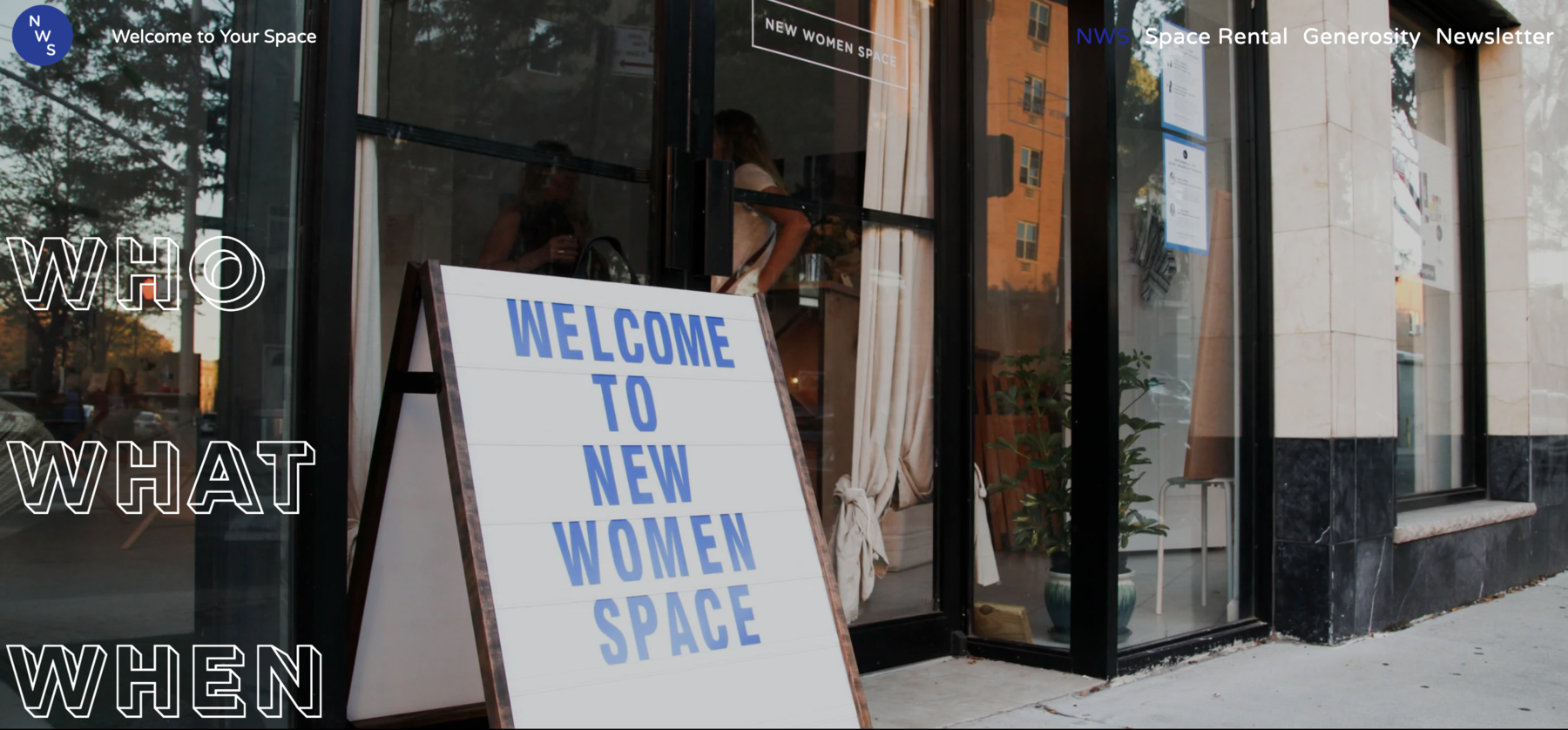
What it is: A Brooklyn-born community space hosting classes, meetups, and local events built around grassroots connection.
Standout capability: Approachable, low-barrier programming that makes first-time participation easy.
Pricing: Generally event-based rather than a fixed membership fee; formal membership models appear to still be evolving.
Best for: Local joiners who prefer a casual, come-as-you-are format over formal membership.
Main limitation: Less built-in continuity than a membership club unless you organize your own cadence, and it’s anchored in a single city (Brooklyn), so it won’t travel with you.
A: Prices range widely. Costs generally track with clubhouse amenities, event frequency, and how curated the membership process is - community-first clubs without a physical clubhouse, like Les Amis, tend to charge less while offering fewer on-site perks in exchange for more flexibility.
A: Look for formats that engineer repeated time together rather than one-off events - research suggests it typically takes more than 200 hours before an acquaintance becomes a genuinely close friend. Clubs with small-group caps, around 8 to 12 people, and consistent touchpoints every one to three months tend to get you there faster than large, infrequent mixers.
A: It varies by club and even by individual event. Some run occasional mixed-gender or guest nights while keeping core programming women-only. It's worth checking a club's specific guest policy before joining, or before inviting someone else along.
A: Yes, prioritize communities that operate across multiple cities so your membership travels with you rather than resetting every time you move. Les Amis is one example, running across 13 cities in Europe and the US. If your club of choice is single-city, ask directly whether it has reciprocal access or an affiliate group wherever you're headed next.
A: Clubhouse models give you on-site amenities and a predictable physical space, but usually at a higher price. Roving or app-led communities trade that fixed infrastructure for flexibility and more curated experiences. The right call depends on how you actually like to socialize - wellness and workspace amenities versus small, mobile gatherings that go wherever the city takes them.
There’s no universal best women’s club, only the one that matches how you want to spend your time. If a physical home base with wellness and workspace amenities matters most, a clubhouse like Verity or Grace Belgravia is worth the premium. If you want talks and big ideas, The Trouble Club does that well.
But if what you want is friendships that hold up over time, Les Amis is the one built for it, and its advantages add up:
Pick something with a consistent cadence, show up more than once, and follow up within a week while the connection is fresh.
Join nowWe believe that a strong female circle is one of the key components of a successful and fulfilled life for every woman
Your family of girlfriends